

The C flat minor scale is a rare and highly theoretical key that every advanced pianist and theory-minded musician will eventually encounter. On paper the C♭ minor scale looks complex—filled with flats and even double-flats—but on the piano its pitches are enharmonically equivalent to the more familiar B minor family. This guide explains exactly what the C flat minor scale is, how to find and play it on the piano, how the scale functions harmonically, what it sounds like, practical fingerings and exercises, and why composers sometimes prefer the C♭ minor scale notation over its enharmonic cousins.
Throughout this guide you’ll see both names—C flat minor scale and C♭ minor scale—used naturally so you recognize either spelling when reading scores or analyzing music. Wherever possible the explanations focus on practical piano technique so you can apply the theory directly at the keyboard.

What Is The C Flat Minor Scale?
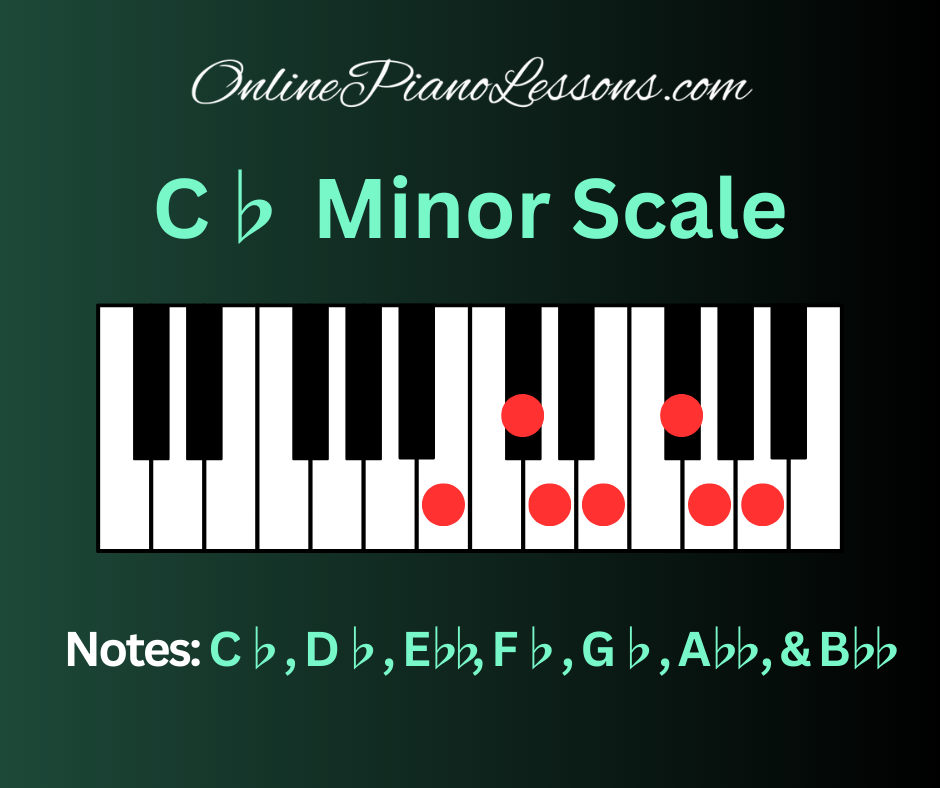
The C flat minor scale (also written C♭ minor scale) is the natural minor scale that begins on the pitch C♭. In strict theoretical notation the scale contains the following notes:
C♭ – D♭ – E♭♭ – F♭ – G♭ – A♭♭ – B♭♭ – C♭
Yes—those spellings include double-flats (E♭♭ = D, A♭♭ = G, B♭♭ = A) which is why the C flat minor scale is rarely used in everyday repertoire. On the piano the C♭ minor scale sounds the same as the B minor collection (B – C# – D – E – F# – G – A – B), but the notation and theoretical relationships are different. Learning the C flat minor scale trains you to read and think in flat-based harmonic contexts.
Why Use The C♭ Minor Scale Notation?
You may wonder: if the C flat minor scale sounds like B minor, why not just write it as B minor? There are a few important reasons:
-
Harmonic consistency: When a passage modulates from a flat-heavy key (for example, from G♭ major or D♭ major), it can be more consistent to spell a minor area with flats—hence the C♭ minor scale—so that voice-leading retains correct letter names.
-
Theoretical clarity: In advanced analysis, maintaining letter-name relationships (each scale degree having a unique letter) matters. The C♭ minor scale preserves this.
-
Orchestral and editorial context: Some transpositions and reductions for ensembles require flat spellings to align with wind or string part notation.
On the piano you will play the same sounding pitches, but being fluent in the C♭ minor scale notation helps you read complex scores and understand compositional intent.
Natural, Harmonic, And Melodic Forms
Like all minor scales, the C flat minor scale appears in three common forms used for different musical purposes.
Natural C♭ Minor Scale (Aeolian):
C♭ – D♭ – E♭♭ – F♭ – G♭ – A♭♭ – B♭♭ – C♭
Harmonic C♭ Minor Scale:
C♭ – D♭ – E♭♭ – F♭ – G♭ – A♭♭ – B♭♮ – C♭
(The seventh degree is raised: B♭♭ → B♭ natural in notation; on piano you play A → B♭ in enharmonic terms.)
Melodic C♭ Minor Scale:
-
Ascending: C♭ – D♭ – E♭♭ – F♭ – G♭ – A♭♮ – B♭♮ – C♭ (raise 6th and 7th)
-
Descending: C♭ – B♭♭ – A♭♭ – G♭ – F♭ – E♭♭ – D♭ – C♭ (revert to natural minor)
When practicing at the piano, it’s helpful to hear these as the enharmonic equivalents (B minor variants) while still thinking about the theoretical spellings when reading scores.
How To Find The C♭ Minor Scale On The Piano
Physically on the piano, the C flat minor scale is played using the same keys as the B minor scale. Map the theoretical C♭ to the sounding B on the keyboard and proceed:
-
C♭ (sound B) → D♭ (C#) → E♭♭ (D) → F♭ (E) → G♭ (F#) → A♭♭ (G) → B♭♭ (A) → C♭ (B)
This mapping means you don’t need to learn new muscle patterns to play the C♭ minor scale; you need to learn to read and interpret the notation correctly and to consider its harmonic implications.
Fingerings And Technical Tips For Piano
Use standard minor-scale fingerings on the piano, keeping fingering consistent across practice sessions. Here are suggested one-octave fingerings (use the same approach for two octaves).
Right hand (ascending): 2 – 3 – 1 – 2 – 3 – 1 – 2 – 3
Left hand (ascending): 3 – 2 – 1 – 3 – 2 – 1 – 3 – 1
Because the physical layout is the same as B minor, many pianists find the black/white pattern comfortable. Focus on relaxed wrist motion, even tone, and smooth thumb crossings. When transitioning between natural, harmonic, and melodic forms, mark the raised degrees in your practice scores so you don’t accidentally play the wrong alteration.
Chords Derived From The C♭ Minor Scale
The diatonic triads of the C flat minor scale (spelled in flats) are important for harmonic analysis and accompaniment on the piano:
- i — C♭ minor: C♭ – E♭♭ – G♭
- ii° — D♭ diminished: D♭ – F♭ – A♭♭
- III — E♭♭ major: E♭♭ – G♭ – B♭♭
- iv — F♭ minor: F♭ – A♭♭ – C♭
- v — G♭ minor: G♭ – B♭♭ – D♭
- VI — A♭♭ major: A♭♭ – C♭ – E♭♭
- VII — B♭♭ major: B♭♭ – D♭ – F♭
On the piano these chords will sound like the triads in B minor/G major regions; however, the flat spellings guide voice-leading and resolution in the score. When accompanying a singer or ensemble, thinking in C♭ minor scale terms can clarify chord choices and inversions.

What The C♭ Minor Scale Sounds Like
Sonically, the C flat minor scale on piano is dark, introspective, and richly colored—qualities typical of minor keys but with extra weight due to its flat-based sonority. Although you’ll most often encounter the sound in the guise of B minor, the C♭ minor scale’s notational environment (lots of flats) often implies a different harmonic context: more chromaticism, flatter-centric voice-leading, or an orchestral texture that favors flat spellings.
Use the scale for moody preludes, dense harmonic textures, and passages that require careful voice-leading. Pianists should practice the C♭ minor scale both technically and musically—think phrasing, dynamics, and inner voices.
Practice Routine And Exercises
- Scale Repetition: Two octaves, hands separately, then together—alternate natural, harmonic, and melodic forms.
- Arpeggios: Practice minor arpeggios and inversions based on the C♭ minor scale chords.
- Chord Progression Loops: Try i–VI–III–VII and i–iv–V (V raised in harmonic minor) to internalize harmonic movement.
- Transcription Exercise: Take a short B minor melody and rewrite it as C♭ minor in notation; play it on the piano, thinking in flats.
- Sight-Reading: Occasionally read pieces or examples in C♭ minor to improve reading fluency.
Daily focused practice (15–20 minutes) on these drills will make the C flat minor scale notation and its piano execution second nature.
FAQ
Is the C flat minor scale the same as B minor on piano?
Sonically yes—the C♭ minor scale sounds the same as the B minor collection on the piano. The difference is theoretical and notational.
Why would a composer use C♭ minor instead of B minor?
To preserve flat-based harmonic relationships, correct letter-name spellings, or to maintain consistency when modulating from flat keys.
How many flats are in the C♭ minor key signature?
The theoretical C♭ minor scale involves seven flats (effectively the same pitches as B minor when spelled enharmonically).
Is C♭ minor hard to play on the piano?
No—the physical execution is identical to B minor. The challenge is reading and thinking in the flat-heavy notation.
Should pianists practice the C♭ minor scale?
Yes. Practicing the C♭ minor scale improves sight-reading, theoretical understanding, and your ability to interpret complex scores that favor flat spellings.

 Hi, I'm Thomas, Pianist Composer,
  I love playing piano, creating new melodies and songs, and further developing my online piano course and making updates/additions to my site OnlinePianoLessons.com!
  Now that is what I call fun!