


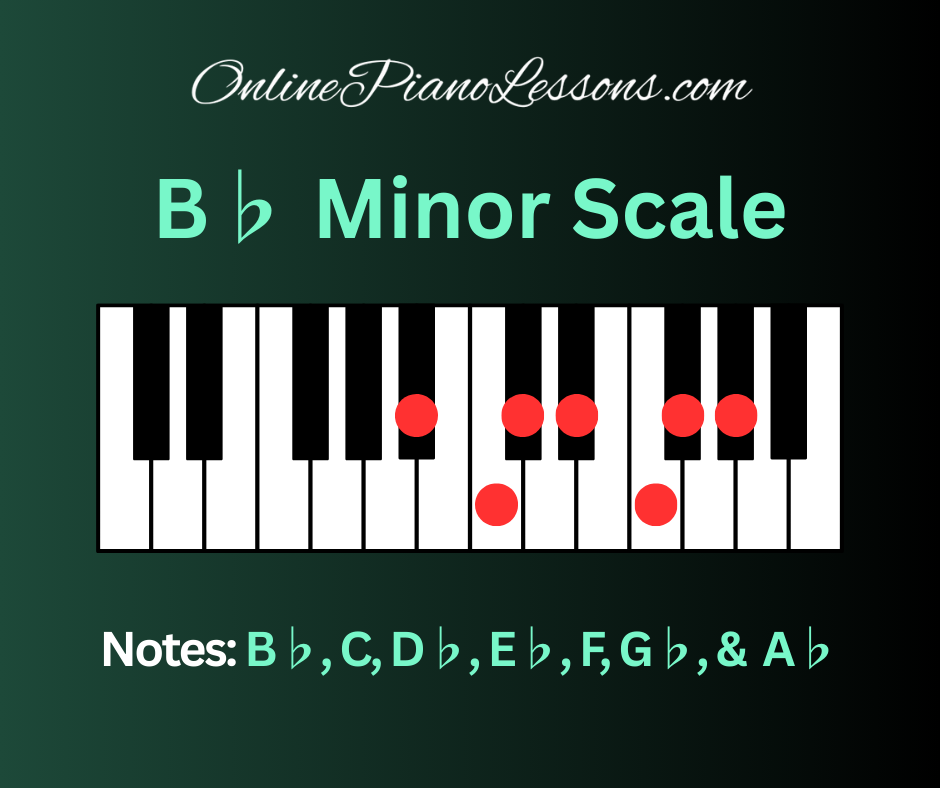
The B flat minor scale is a powerful, dark, and expressive minor key that every pianist should know. On the piano, the B♭ minor scale delivers a brooding, dramatic color that composers often use for introspective passages, stormy climaxes, and cinematic moods.
This definitive guide explains what the B flat minor scale is, how to find and play it on the piano, its different forms (natural, harmonic, melodic), common chords and progressions, useful fingerings, practice routines, and musical applications. Throughout this article you’ll see both the written name B flat minor scale and the shorthand B♭ minor scale used naturally so you recognize either spelling in sheet music or conversations about the piano.
What Is The B Flat Minor Scale?
The B flat minor scale (B♭ minor scale) is the natural minor scale that begins on B♭ and follows the pattern of whole and half steps that defines all natural minor scales: whole, half, whole, whole, half, whole, whole. When you play the B flat minor scale on the piano, the pitches you play (in the natural form) are:
B♭ – C – D♭ – E♭ – F – G♭ – A♭ – B♭
The key signature for the B flat minor scale contains five flats: B♭, E♭, A♭, D♭, and G♭. This abundance of flats gives the B flat minor scale its distinctive, shadowy timbre on the piano and shapes common chord choices and voice-leading patterns you’ll encounter in repertoire.
Natural, Harmonic, And Melodic Forms
Like any minor key, the B flat minor scale appears in three commonly used forms: natural, harmonic, and melodic. Each form is used for different musical functions on the piano.
Natural B♭ Minor Scale (Aeolian):
B♭ – C – D♭ – E♭ – F – G♭ – A♭ – B♭
This is the basic B flat minor scale you’ll practice first. It conveys the pure minor mood: somber, melancholic, and stable.
Harmonic B♭ Minor Scale:
B♭ – C – D♭ – E♭ – F – G♭ – A – B♭
In the harmonic form, the seventh degree (A♭ → A natural) is raised to create a stronger leading tone. On the piano the raised A (natural) creates a dramatic pull back to B♭, which is crucial for classical cadences and dominant harmony in the B flat minor scale.
Melodic B♭ Minor Scale:
-
Ascending: B♭ – C – D♭ – E♭ – F – G – A – B♭ (raise 6th and 7th: G♭ → G, A♭ → A)
-
Descending: B♭ – A♭ – G♭ – F – E♭ – D♭ – C – B♭ (reverts to natural minor)
The melodic form smooths the ascending line for singable melodies; pianists should be comfortable switching between melodic and natural forms when performing the B flat minor scale.
How To Find The B Flat Minor Scale On The Piano
To play the B flat minor scale on the piano, find the B♭ key (the black key immediately to the left of B natural). From that starting point, follow the scale steps using the appropriate black and white keys: B♭ (black), C (white), D♭ (black), E♭ (black), F (white), G♭ (black), A♭ (black), B♭ (black). Because the B flat minor scale uses mostly black keys, many pianists find the scale comfortable to play with a slightly curved hand position that lets the fingers fall naturally on the black keys.
When practicing the B flat minor scale, visualize the pattern on the keyboard and say the note names aloud—this reinforces both your ear and finger memory and ensures you internalize the scale on piano.
Fingerings For The B Flat Minor Scale
Good fingering matters. Here are recommended fingerings for one-octave practice that work well on the piano. Adjust slightly for hand size if necessary.
Right Hand (Ascending, one octave):
2 (B♭) – 3 (C) – 1 (D♭) – 2 (E♭) – 3 (F) – 1 (G♭) – 2 (A♭) – 3 (B♭)
Left Hand (Ascending, one octave):
3 (B♭) – 2 (C) – 1 (D♭) – 3 (E♭) – 2 (F) – 1 (G♭) – 3 (A♭) – 1 (B♭)
For two-octave runs, use standard thumb-under technique at the same points. Practicing these fingerings slowly will help your hands learn the physical layout of the B flat minor scale on the piano.
Chords and Progressions in B Flat Minor
Knowing the common triads and seventh chords from the B flat minor scale helps you harmonize melodies and improvise. In the natural B flat minor scale the diatonic triads are:
- i — B♭ minor (B♭–D♭–F)
- ii° — C diminished (C–E♭–G♭)
- III — D♭ major (D♭–F–A♭)
- iv — E♭ minor (E♭–G♭–B♭)
- v — F minor (F–A♭–C)
- VI — G♭ major (G♭–B♭–D♭)
- VII — A♭ major (A♭–C–E♭)
When using the harmonic B flat minor scale, the v chord often becomes major (F–A–C) or dominant seventh (F7) because of the raised 7th (A natural). Common progressions you’ll hear and play on piano include i–VI–III–VII (B♭m–G♭–D♭–A♭) and i–iv–V (with V altered in harmonic minor for stronger resolution). These progressions define the sound world of the B flat minor scale.
Sound Character And Musical Uses
The B flat minor scale has a dark, introspective, and sometimes heroic character. On the piano, B♭ minor often feels weighty and profound—suitable for nocturnes, preludes, film-score motifs, and dramatic ballads. Composers choose the B flat minor scale when they want depth and emotional complexity: its low tessitura and flat-rich harmonies create warmth and gravity.
Because the B♭ minor scale is the relative minor of D♭ major, pianists can easily move between those two tonalities in a program or improvisation. Jazz pianists use B♭ minor for modal vamps and minor ii–V–I progressions, while classical pianists encounter the key in Romantic-era works.
Practice Routine For Mastering The B Flat Minor Scale
Here’s a practical plan to make the B flat minor scale fluent on piano:
- Daily Scale Practice: 5–10 minutes playing two octaves hands separately, then together, at various tempos. Alternate natural, harmonic, and melodic forms.
- Arpeggios: Play B♭ minor arpeggios in root position and inversions across two octaves.
- Chord Drills: Loop common progressions (i–VI–III–VII, i–iv–V) and practice smooth voice-leading.
- Melodic Etudes: Compose or transcribe short melodies using only the B♭ minor scale notes; play them expressively.
- Sight-Reading: Read short pieces or exercises notated in B♭ minor to build reading confidence in the key signature of five flats.
- Improv Sessions: Jam over a B♭m vamp, experimenting with melodic minor colors and altered dominants.
Consistent micro-practice—15 minutes every day—yields steady improvement and makes the B flat minor scale feel natural on the piano.
Common Pitfalls And How To Avoid Them
- Rushing thumb crossings: Practice slowly to keep even tone when the thumb passes under.
- Confusing melodic/harmonic forms: Label your practice sections clearly so you know when to use raised 6th/7th degrees.
- Over-pedaling: The B♭ minor scale’s dark color can become muddy—use the sustain pedal sparingly and change it cleanly.
- Neglecting voice leading: When practicing chords, focus on common tones and stepwise motion to make progressions sing on the piano.
Addressing these will make your B♭ minor scale playing both accurate and musical.
FAQ
What notes make up the B flat minor scale?
The natural B flat minor scale is B♭, C, D♭, E♭, F, G♭, A♭, B♭. If using the melodic or harmonic forms you’ll add raised 6th/7th degrees: G and A natural when ascending.
How many flats are in the B♭ minor key signature?
B♭ minor has five flats: B♭, E♭, A♭, D♭, and G♭.
Is B♭ minor hard to play on the piano?
Not necessarily—many pianists find the black-key placement comfortable. Like any scale, it just needs consistent practice.
Which famous pieces use the B flat minor scale?
Works and passages in B♭ minor appear throughout the Romantic repertoire and in modern film music—look for dramatic preludes and nocturne-like pieces.
Should I practice B♭ minor as both B♭ and its enharmonic equivalents?
Practicing in B♭ minor is essential; knowing enharmonic equivalents (like A# minor) is helpful theoretically but less common in performance. Focus on B♭ minor for piano repertoire.

 I love playing piano, creating new melodies and songs, and further developing my online piano course and making updates/additions to my site OnlinePianoLessons.com!
  Now that is what I call fun!