
The C minor chord is a powerful, dramatic, and versatile harmony that shows up in classical, jazz, pop, and film music. If you play the piano and want to deepen your harmonic vocabulary, learning the C minor chord (often shortened to the Cm chord) inside out is an excellent place to start.
This guide explains what the C minor chord is, how to find it on the piano, how it functions within the key of C minor, useful inversions and voicings, common progressions, practice routines, and musical applications. Read on and by the end you’ll be able to play, hear, and use the Cm chord confidently.
What Is The C Minor Chord?
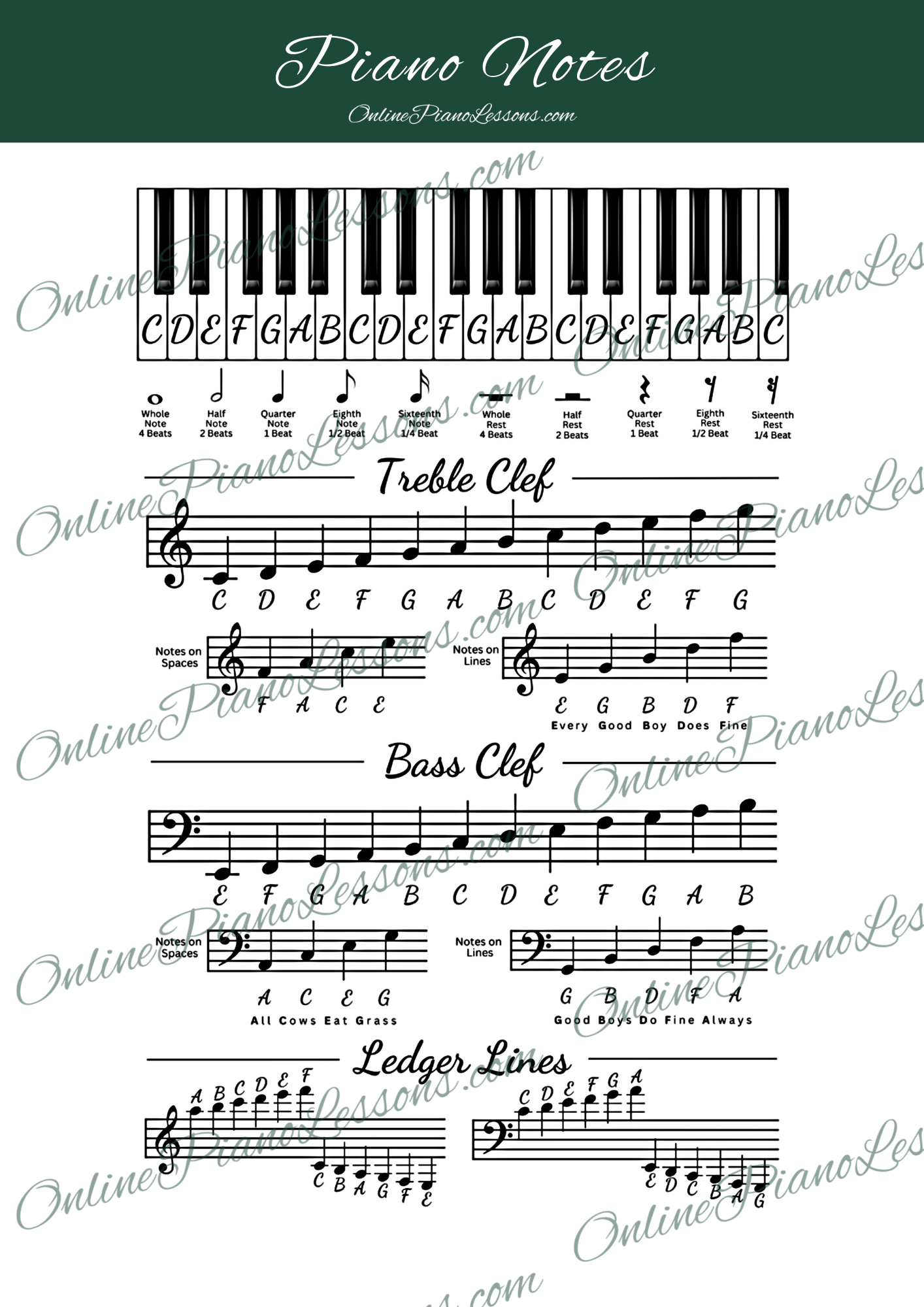
A C minor chord is a triad built from the notes C, E♭, and G. On the piano, that means pressing the white key C, the black key E♭ (the black key one step left from E), and the white key G together. The interval between C and E♭ is a minor third, which gives the C minor chord its darker, more introspective character compared with major triads. Musicians often write C minor chord in lead sheets as Cm chord; both terms refer to the same harmony.
On the piano, the Cm chord is easy to visualize because the pattern repeats across octaves. Once you can find C, E♭, and G quickly, you can play Cm chord in any register or inversion. That simple triad is the foundation for hundreds of songs and countless expressive textures.
The C Minor Scale And Why It Matters
To understand the Cm chord more deeply, it helps to see it inside the C minor scale. The natural C minor scale is:
C – D – E♭ – F – G – A♭ – B♭ – C
The Cm chord uses scale degrees 1, 3♭, and 5 (C, E♭, G). Knowing the scale means you can build melodies, bass lines, and inner voices that naturally support the Cm chord on the piano. Composers frequently mix the natural minor with the harmonic minor (raising B♭ to B natural) or the melodic minor (raising A♭ and B♭ when ascending) to create different tensions and resolutions around the Cm chord. Practically, that means the Cm chord can sit in different harmonic colors depending on which minor flavor you choose.
How To Play The Cm Chord On The Piano (Root Position)
To play a basic C minor chord on the piano in root position, place your right-hand thumb on C, middle finger on E♭, and pinky on G. For the left-hand, use pinky on C, middle finger on E♭, and thumb on G. Press all three at once for a full, balanced triad. Because E♭ is a black key, pay attention to hand shape—curve your fingers so your fingertips press cleanly and your wrist stays relaxed.
Play the Cm chord in several octaves to hear how range changes the emotional quality: low-register Cm chord can sound ominous or heavy; mid-register Cm chord sounds warm and balanced; high-register Cm chord sounds fragile or bell-like.
Inversions Of The C Minor Chord
Inversions are essential on the piano because they make chord transitions smooth and bass lines musical.
- First inversion (E♭–G–C): Put E♭ in the bass. Notated C/E♭ sometimes, but commonly played as part of a voice-leading move. This inversion softens the root gravity and helps the Cm chord connect to chords that want E♭ as a step.
- Second inversion (G–C–E♭): Put G in the bass. This inversion creates an open, suspended quality and is useful when the bass holds a pedal tone on G or when you want a wider spacing.
Practice playing the Cm chord in root position and both inversions up and down the keyboard; then practice moving from Cm chord to neighboring harmonies while keeping common tones in the same voice. That simple habit makes your piano playing sound far more professional.
What The C Minor Chord Sounds Like
The emotional quality of the Cm chord is often described as melancholic, serious, or cinematic. On the piano, voicing matters: a tightly voiced Cm chord (close position) sounds compact and focused; an open-voiced Cm chord (spreading notes across registers) sounds expansive and dramatic. In film scoring and pop ballads, composers use Cm chord when they want to evoke longing, suspense, or noble sadness. In jazz, Cm chord is a neutral emotional platform that can be colored by adding sevenths, ninths, or altered extensions.
Chords In The Key Of C Minor
Understanding the harmonic family around the Cm chord helps you create progressions and predict which chords will sound natural on the piano. In C natural minor, the diatonic triads are:
- i — C minor (C–E♭–G)
- ii° — D diminished (D–F–A♭)
- III — E♭ major (E♭–G–B♭)
- iv — F minor (F–A♭–C)
- v — G minor (G–B♭–D)
- VI — A♭ major (A♭–C–E♭)
- VII — B♭ major (B♭–D–F)
Because composers often raise the 7th (B♭ → B natural) to create a dominant V (G major) that resolves strongly to Cm chord, you’ll hear both G minor and G major used before Cm chord in different styles. On the piano, experiment with both v and V before returning to Cm chord and notice the stronger pull when G is major.
Voicings, Extensions, And Jazz Colors
The basic Cm chord is just the start. On piano, you can enrich the Cm chord with additional tones:
- Cm7 (C–E♭–G–B♭): A common, mellow extension used in jazz, R&B, and pop.
- Cm9 (C–E♭–G–B♭–D): Adds melodic color ideal for ballads.
- Cm11, Cm6, and Cm(add9): Each adds unique color—use sparingly to avoid muddiness in the lower registers.
- Sus and altered variants: For tension, try Csus2 (C–D–G) or Csus4 (C–F–G) resolving back to Cm chord.
When playing extended Cm chord voicings on the piano, voice the chord so that the third (E♭) and the seventh (B♭) are clear and not buried under dense low-frequency notes.
Arpeggios, Accompaniment Patterns, And Rhythms
To make the Cm chord musical, practice several accompaniment patterns:
- Broken arpeggio: C → E♭ → G → C, repeated—great for intros and ballads.
- Alberti bass: C–G–C–E♭ in the left hand while the right hand plays melody—classic piano texture.
- Block-chord comping: play Cm chord on strong beats and add rhythmic stabs on off-beats for groove.
- Syncopated patterns: hold Cm chord while adding syncopated right hand fills for pop and R&B styles.
Practicing these shapes makes Cm chord functional, not just theoretical.
Common Progressions Using The Cm Chord
Here are practical chord loops to try on the piano that center on Cm chord:
- Cm – A♭ – E♭ – B♭ (i – VI – III – VII): cinematic and widely used.
- Cm – G – A♭ – B♭ (i – V – VI – VII) when using harmonic minor gives a strong pull back to Cm chord.
- Cm – Fm – B♭ – Cm (i – iv – VII – i) classic minor-key motion.
- Cm – E♭ – B♭ – G (i – III – VII – V) useful when modulating toward G or E♭.
Rotate through these progressions, practice inversions for smooth bass lines, and use different rhythms to hear how the Cm chord functions in context.
Practice Routine To Master The Cm Chord
Try this 20-minute daily routine on your piano:
- Warm-up: C natural minor scale two octaves hands separately (3 minutes).
- Triad drill: play Cm chord in root + inversions ascending and descending (5 minutes).
- Arpeggio practice: broken arpeggios and Alberti bass with Cm chord (5 minutes).
- Progression loop: play two progressions that end on Cm chord, practice voice-leading (5 minutes).
- Color exploration: try Cm7 and Cm9 voicings (2 minutes).
Consistency and focused repetition are the fastest routes to making the Cm chord second nature on the piano.
Common Mistakes And How To Fix Them
- Muddy low voicing: avoid stacking too many low notes; use shell voicings left hand (root + fifth) and put color tones in the right hand.
- Stiff fingers on black key: E♭ requires relaxed curved fingers—practice slow scales that include E♭ to build comfort.
- Poor voice-leading: keep common tones between chords (for example, G often stays between Cm chord and E♭ major) to smooth transitions.
Correct these and the Cm chord will sound much cleaner and more musical.
FAQ
What notes make up a C minor chord?
The C minor chord consists of C, E♭, and G.
Is Cm chord the same as C minor?
Yes—Cm chord is the shorthand notation for C minor chord.
How can I make my Cm chord sound fuller on the piano?
Use open voicings, double the root in a higher octave, add an appropriate extension such as Cm7 or Cm9, and use sustain pedal carefully.
Should I use harmonic minor or natural minor when I play Cm chord?
Both are valid. Use harmonic minor (raise B♭ to B) when you need a stronger dominant (G major) resolving to Cm chord; use natural minor for a more modal, smoother sound.
What styles commonly use the Cm chord?
Classical, jazz, film scores, pop ballads, R&B, and many singer-songwriter pieces rely on the Cm chord for emotional color.

 I love playing piano, creating new melodies and songs, and further developing my online piano course and making updates/additions to my site OnlinePianoLessons.com!
  Now that is what I call fun!