
The A minor chord is one of the most important and versatile harmonies a pianist can learn. Whether you’re a complete beginner or an advanced player, understanding the A minor chord, its inversions, voicings, and role in the key of A minor will immediately improve your playing and composition on the piano. This guide explains what an A minor chord is, how it’s constructed, how it sounds, how to play it in every position, and practical ways to use it in songs, progressions, and improvisation at the piano.
Throughout the article you’ll see the terms A minor chord, Am chord, and piano used naturally and frequently so you can internalize the vocabulary and apply it at the keyboard. Let’s get started.
What Is An A Minor Chord?
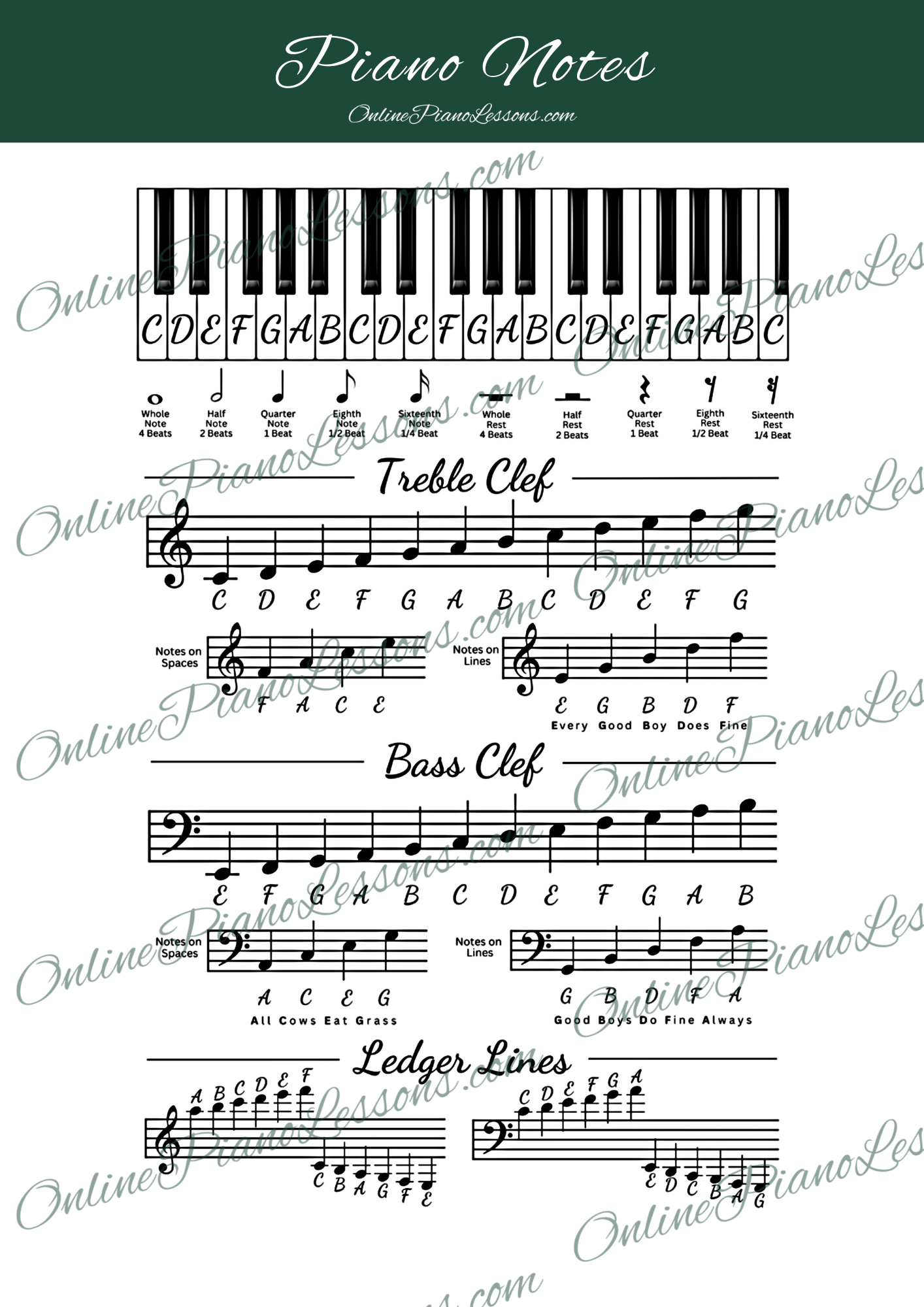
An A minor chord (often notated Am chord) is a triad built from the notes A, C, and E. On the piano, the A minor chord’s three notes are all white keys, which makes it physically easy to play and visually simple to read. The defining feature that makes A minor chord minor (rather than major) is the interval between the root (A) and the third (C): that interval is a minor third. The Am chord therefore sounds darker or more melancholic than the bright sound of a major triad.
When you play an A minor chord on the piano, the immediate sensation is a gentle, introspective quality—useful for ballads, modal pieces, and songwriting. The Am chord functions both as a tonic in the key of A minor and as a common chord that appears in many other keys and modal contexts on the piano.
The A Minor Scale And The Am Chord
The natural A minor scale (A, B, C, D, E, F, G, A) is the diatonic source of the A minor chord. The Am chord uses the 1st, 3rd, and 5th degrees of the A minor scale: A (1), C (b3), and E (5). Because this triad fits entirely within the natural minor scale, the Am chord is often the starting harmonic center when composing or playing in A minor on the piano.
It’s also useful to know the relative major: C major. The Am chord shares all three notes with the C major chord (C–E–G). That relationship explains why progressions sometimes move smoothly between A minor and C major on the piano—the two harmonies are closely related, sharing tonal colors and functional roles.
How The A Minor Chord Sounds On The Piano
On the piano, the A minor chord sounds warm, reflective, and slightly plaintive. The timbre depends on register: low-register A minor chords can sound brooding and heavy, while high-register Am chord voicings feel delicate and fragile. The piano’s natural sustain and decay make the Am chord especially suitable for arpeggios, slow comping, and atmospheric textures.
Because the Am chord uses only white keys, beginners often find it a comfortable place to start their explorations of minor harmony on the piano. Composers and songwriters favor the Am chord when they want emotional directness without complex coloration—its clear triadic structure translates well across styles.
How To Play The A Minor Chord On The Piano (Root Position)
To play a basic A minor chord on the piano in root position, use:
- Right hand: thumb on A (1), middle finger on C (3), pinky on E (5).
- Left hand: pinky on A (5), middle finger on C (3), thumb on E (1).
This root-position Am chord gives the clearest sense of the chord’s identity. Practice pressing all three notes together with even pressure and listen for a balanced sound across the keys. Once you can do this comfortably in multiple octaves, you can start using the Am chord in progressions and pieces.
A Minor Chord Inversions On The Piano
Inversions let you voice the Am chord in ways that make harmonic movement smoother. There are two common inversions for the Am chord:
First Inversion (C – E – A)
- Right hand fingering: 1–2–5 or 1–3–5 depending on hand size.
- Left hand fingering: 3–2–1.
First inversion places the third (C) in the bass and softens the chord’s rootfulness. Use it when you want smoother bass motion between chords.
Second Inversion (E – A – C)
- Right hand fingering: 1–3–5.
- Left hand fingering: 5–2–1.
Second inversion often works well for pedal points or when the bass is holding a sustained E. Practicing all three shapes—root, first, and second inversion—helps you move from one chord to the next without awkward leaps on the piano.
Useful Voicings And Variations Of The Am Chord
Beyond triads, you’ll want to explore richer Am chord voicings on the piano:
- Am7 (A–C–E–G): adds the seventh for mellow jazz and pop colors.
- Am6 (A–C–E–F#): gives a slightly brighter, more ambiguous flavor.
- Am9 (A–C–E–G–B): lush and modern when used in ballads or R&B on the piano.
- Am(add9) (A–C–E–B): adds a sweet top note without changing basic function.
- A sus2 / A sus4 variants: (A–B–E or A–D–E) can replace the Am chord temporarily for movement.
When playing these on the piano, experiment with left-hand shell voicings (root + fifth) while the right hand plays extended tones. That approach keeps the harmony clear while adding color.
The Role Of The Am Chord In Progressions And Songwriting
The Am chord is central to many popular chord progressions, especially in minor-key songs and modal pieces. Common progressions include:
- Am – F – C – G (vi – IV – I – V in C major, or i – VI – III – VII in A minor contexts).
- Am – G – F – E (descending minor progression that creates tension toward E).
- Am – Dm – G – C – Am (a circle-like progression that moves through related harmonies).
Because Am chord is closely related to C major, many progressions will fluidly move between the two. On the piano, you can use inversions to keep the bass line stepwise, making transitions more singable and pleasant.
Arpeggios, Comping Patterns, And Rhythms For The Am Chord
To make the Am chord more musical on the piano, practice common accompaniment patterns:
- Broken arpeggio: play A → C → E → A across octaves. This is perfect for ballads and introspective sections.
- Alberti bass: play A–E–A–C in left hand while the right hand plays melody—classical and pop-friendly.
- Block chord comping: hold Am chord on strong beats and add short stabs on off-beats for rhythmic drive.
- Syncopated patterns: accent the “&” beats while sustaining the Am chord for groove-based styles.
These patterns help integrate the Am chord into actual music rather than static harmony.
Ear Training And Recognizing The Am Chord
A practical skill for any pianist is to recognize the sound of the Am chord by ear. Hear and sing the root (A), then the minor third (C), then the fifth (E). Practicing identification tasks—hearing a chord and naming it—sharpens your harmonic intuition. A good drill on the piano: play a random triad and try to name whether it’s major or minor, then identify if it’s A minor or another chord. Doing this daily will make recognizing the Am chord instantaneous.
Common Mistakes And How To Fix Them
- Uneven balance: beginners often let the left hand overpower. Fix by consciously softening the left hand and practicing hand balance exercises on the piano.
- Stiff wrists: relax and curve fingers to get a rounder tone from the Am chord.
- Wrong inversions at transitions: practice chord changes slowly, focusing on keeping common tones in place to smooth movement.
Correcting these small issues makes the Am chord sound professional and musical on the piano.
Practice Routine To Master The A Minor Chord
Try this 15–20 minute daily routine focused on the Am chord:
- Warm-up: A natural minor scale two octaves (2 minutes).
- Triad drill: play root, 1st and 2nd inversions ascending/descending (5 minutes).
- Arpeggio work: broken arpeggios and Alberti bass patterns (4 minutes).
- Progression practice: loop Am – F – C – G and practice smooth voice leading (4 minutes).
- Extension work: play Am7 and Am9 voicings and listen for color differences (3 minutes).
Repeat for several weeks and you’ll have the Am chord integrated into your repertoire and improvisational toolbox.
FAQ
What notes make up an A minor chord?
The A minor chord (Am chord) is made of A, C, and E.
Is the Am chord easy to learn on the piano?
Yes. The Am chord uses only white keys, making it physically straightforward for beginners on the piano.
How is A minor different from A major?
A minor (Am chord) has a minor third (C) above A, while A major has a major third (C#). That one semitone difference creates a different emotional quality on the piano.
What are good songs that use the Am chord?
Many songs use the Am chord; classic examples include folk ballads, pop songs, and countless minor-key tunes where Am serves as a tonic or important harmony on the piano.
How can I make my Am chord sound more interesting?
Try inversions, add sevenths or ninths (Am7, Am9), use arpeggios, or combine left-hand shell voicings with right-hand extensions to enrich the piano texture.

 I love playing piano, creating new melodies and songs, and further developing my online piano course and making updates/additions to my site OnlinePianoLessons.com!
  Now that is what I call fun!