
The F minor chord is one of the most emotionally rich and dramatic chords you can play on the piano. It is often associated with intensity, longing, tension, and deep expressiveness. Composers across centuries—from classical masters to modern film scorers and pop songwriters—have relied on the F minor chord to convey powerful moods that linger in the listener’s ear.
In this definitive guide, you’ll learn exactly what an F minor chord is, how the Fm chord works on the piano, what it sounds like, how it fits into the key of F minor, and how to practice and apply it musically. Whether you’re a beginner learning your first minor chords or an intermediate player refining your harmonic vocabulary, understanding F minor chords on the piano will elevate your playing significantly.
What Is An F Minor Chord?
An F minor chord is a three-note triad built from the notes F, A♭, and C. On the piano, this means combining one white key (F), one black key (A♭), and another white key (C). The defining characteristic of the F minor chord is the minor third interval between F and A♭. This interval is what gives the chord its darker, more somber quality compared to an F major chord.
In written music and chord charts, the F minor chord is often abbreviated as Fm chord. Both terms refer to the same harmony. When a composer or songwriter indicates Fm, they are instructing the pianist to play some form of the F minor chord, whether in root position, an inversion, or an extended voicing.
Finding The F Minor Chord On The Piano
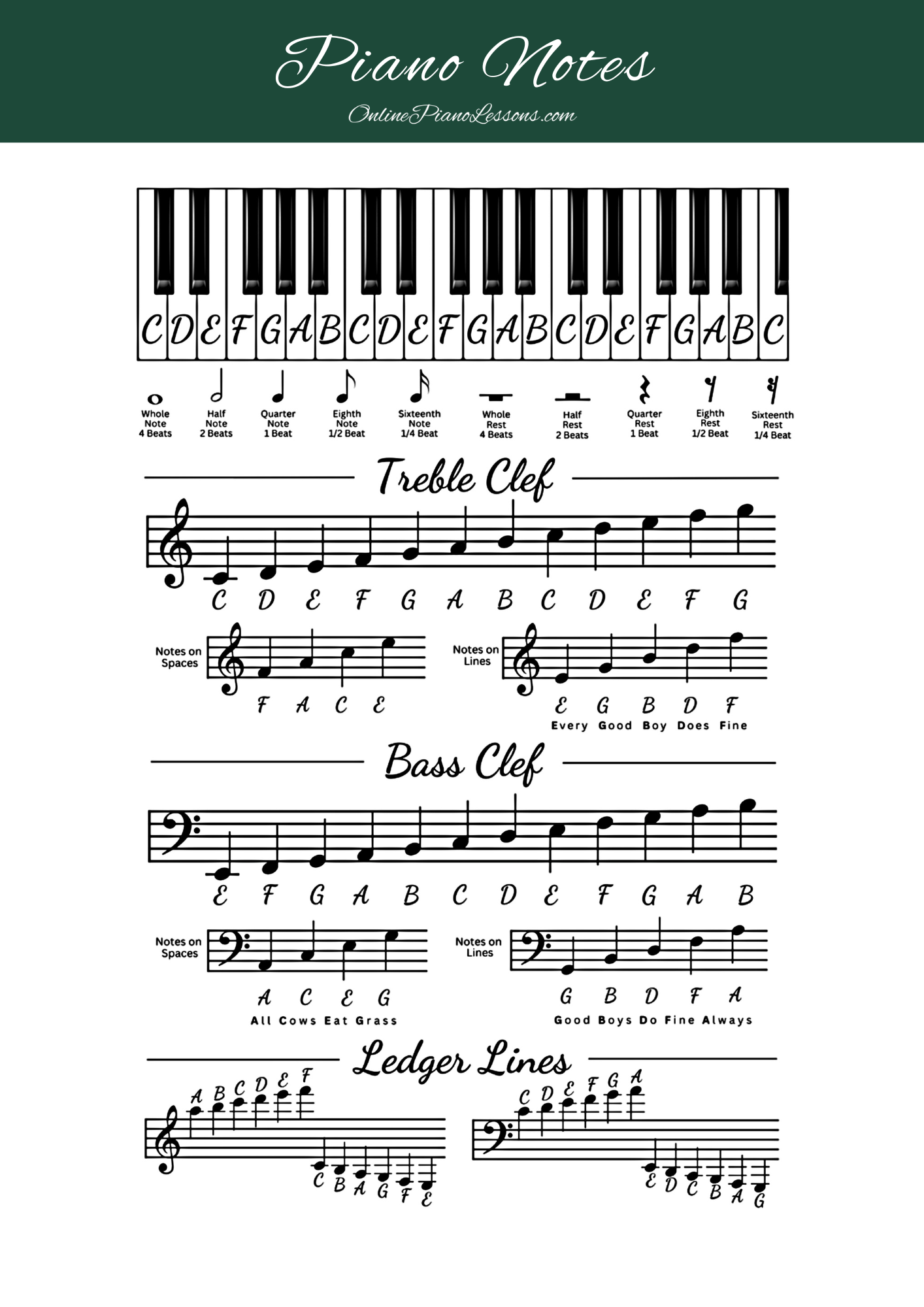
To locate the F minor chord on the piano, start by finding the note F. F is the white key immediately to the left of the group of three black keys. From there:
- Move up a minor third to A♭ (the black key immediately to the left of A).
- Add the perfect fifth above F, which is C.
When played together, F, A♭, and C form the F minor chord. This shape appears repeatedly across the keyboard, and once you recognize it visually and physically, it becomes easy to transpose and reuse in different octaves.
Root Position And Fingerings For The Fm Chord
In root position, the F minor chord has F as the lowest note. A common fingering on the piano is:
- Right hand: thumb on F, middle finger on A♭, pinky on C
- Left hand: pinky on F, middle finger on A♭, thumb on C
This fingering promotes hand balance and helps maintain a relaxed shape. When practicing the Fm chord, focus on pressing all three notes evenly so that one note does not overpower the others.
Inversions Of The F Minor Chord
Chord inversions are essential for smooth, professional-sounding piano playing. The F minor chord has two inversions:
- First inversion: A♭–C–F
This inversion often sounds smoother and is excellent for voice leading. - Second inversion: C–F–A♭
This version has a more open sound and works well as a passing harmony.
Practicing the F minor chord in all inversions across the piano will dramatically improve your ability to connect chords seamlessly in progressions.
What The F Minor Chord Sounds Like
The F minor chord is often described as dark, intense, dramatic, or tragic. On the piano, it has a weighty and serious quality, especially when played in the lower register. Many listeners associate F minor with emotional struggle, mystery, or longing.
Historically, F minor has been considered one of the most expressive keys in Western music. When you play F minor chords on the piano, you may notice how naturally they evoke emotion, even without a melody.
The F Minor Scale And Its Relationship To The Chord
To understand the F minor chord fully, it helps to look at the F minor scale. The natural F minor scale consists of:
F – G – A♭ – B♭ – C – D♭ – E♭ – F
The F minor chord is built from the 1st, 3rd, and 5th notes of this scale: F, A♭, and C. Practicing the scale alongside the chord helps reinforce how harmony and melody interact on the piano.
In harmonic minor, the seventh note is raised to E natural, which creates stronger tension and resolution back to the F minor chord. This is commonly used in classical and dramatic music.
Chords In The Key Of F Minor
Understanding the full set of chords in the key of F minor will help you use the F minor chord more effectively on the piano. The diatonic triads in the natural minor key are:
- i – F minor
- ii° – G diminished
- III – A♭ major
- iv – B♭ minor
- v – C minor
- VI – D♭ major
- VII – E♭ major
In harmonic minor, the v chord often becomes C major, which pulls strongly back to the F minor chord. This relationship is essential in classical harmony and cinematic writing.
Extended And Advanced F Minor Chords
Once you’re comfortable with the basic F minor chord, you can explore extended versions to add color and sophistication on the piano:
- Fm7: F–A♭–C–E♭
- Fm9: F–A♭–C–E♭–G
- Fm6: F–A♭–C–D
- Fm(add9): F–A♭–C–G
These variations of the Fm chord are widely used in jazz, R&B, and film music. Spread the notes between both hands to avoid muddiness and maintain clarity.
Common Piano Progressions Using The F Minor Chord
The F minor chord appears in many expressive chord progressions. Here are a few examples you can practice on the piano:
- Fm – D♭ – A♭ – E♭
- Fm – B♭m – C – Fm
- Fm – E♭ – D♭ – C
- Fm – A♭ – E♭ – Fm
Use inversions of the F minor chord to create smooth transitions and avoid large jumps between chords.
Using The F Minor Chord In Different Musical Styles
The F minor chord works beautifully across a wide range of piano styles:
- Classical Music: Often used in dramatic and emotionally intense compositions
- Film Scores: Perfect for suspense, tragedy, or introspective scenes
- Pop And Rock: Common in emotional ballads and darker arrangements
- Jazz: Expanded into rich Fm chord voicings with extensions
No matter the genre, the F minor chord brings depth and seriousness to your piano playing.
Practice Tips For Mastering F Minor Chords
To build confidence with F minor chords on the piano, try this daily routine:
- Play the F minor scale slowly with each hand.
- Practice the F minor chord in root position and both inversions.
- Play broken chords and arpeggios using F–A♭–C.
- Loop progressions that resolve back to the Fm chord.
- Experiment with extended F minor chord voicings.
Short, consistent practice sessions are far more effective than long, unfocused ones.
Common Mistakes When Playing F Minor Chords
Pianists often struggle with the F minor chord due to:
- Overplaying it too heavily in the lower register
- Avoiding inversions and relying only on root position
- Not balancing the black and white keys evenly
Awareness of these issues will help your F minor chord sound cleaner and more expressive.
FAQ
What notes are in an F minor chord?
An F minor chord consists of F, A♭, and C.
Is Fm chord the same as F minor chord?
Yes, Fm chord is simply a shorthand name for the F minor chord.
Why does the F minor chord sound so dramatic?
The minor third and the natural resonance of F minor on the piano create a dark, emotionally intense sound.
Is F minor a difficult chord for beginners?
It introduces a black key, but with proper fingering, the F minor chord is very approachable on the piano.
How can I make my F minor chord sound more interesting?
Use inversions, add extensions like Fm7 or Fm9, vary rhythm, and explore different registers on the piano.

 I love playing piano, creating new melodies and songs, and further developing my online piano course and making updates/additions to my site OnlinePianoLessons.com!
  Now that is what I call fun!