


Bass Clef Notes Chart
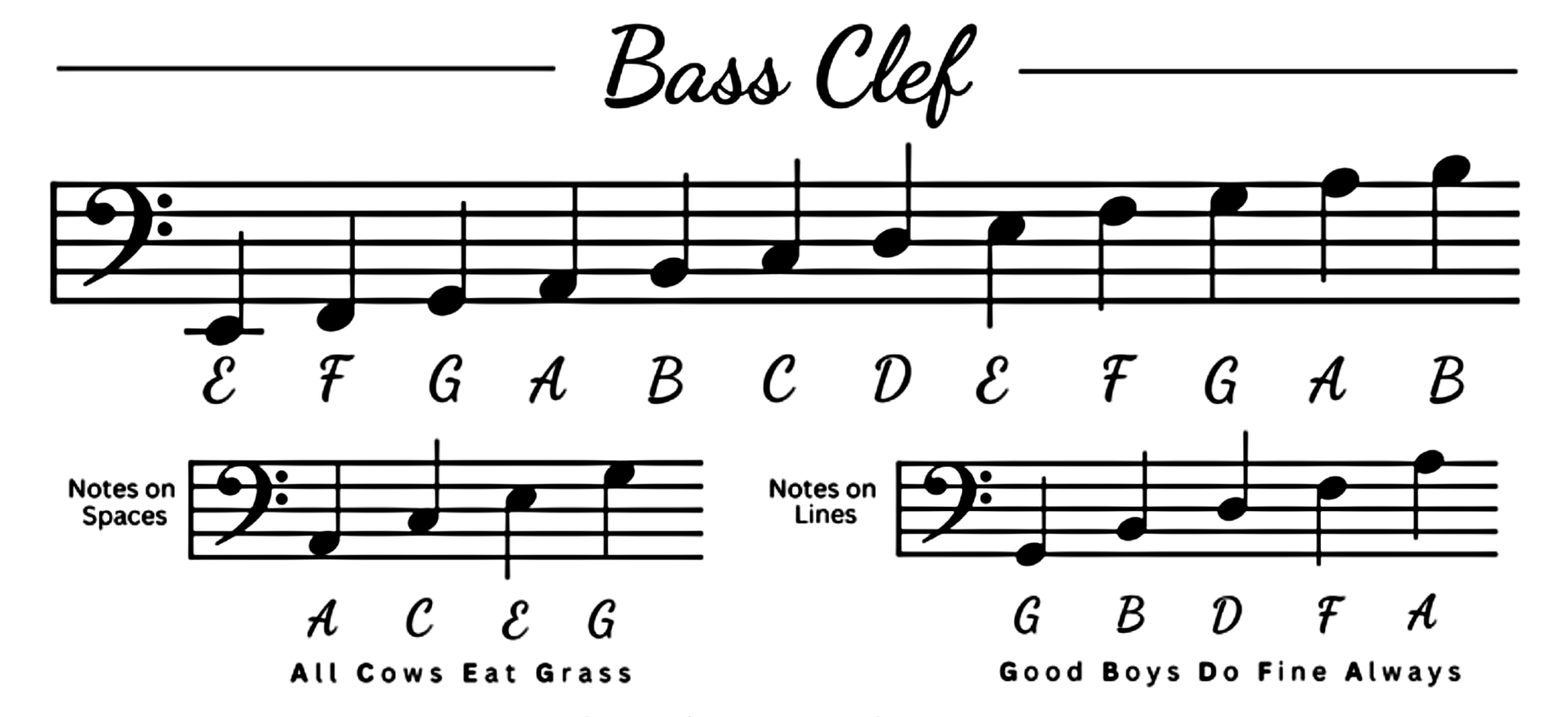
Understanding Bass Clef notes on the piano is one of the most important steps in becoming a well-rounded musician. While many beginners start by learning melodies with the right hand in the treble clef, true mastery comes from understanding the deeper, richer sounds played by the left hand. This guide will walk you through everything you need to know about Bass Clef notes on the piano, including how they work, where they are located, how to read them, and how to practice them effectively.
Whether you’re learning your first chord progression or trying to improve your sight-reading, a solid grasp of Bass Clef notes will make every aspect of your piano playing stronger, clearer, and more confident.
What the Bass Clef Is and Why It Matters
The Bass Clef, also known as the F clef, is used to notate lower-pitched sounds. On the piano, these lower sounds are typically played with the left hand. The two dots surrounding the Bass Clef symbol highlight the F line on the staff, which helps musicians quickly recognize where the F below middle C is located.
Since the piano spans such a wide range of notes, it relies on two primary clefs to organize music clearly: the treble clef for higher notes and the Bass Clef for lower ones. Without a strong understanding of Bass Clef notes, piano players often struggle to read left-hand parts accurately, which results in imbalanced playing and limited musical expression.
Understanding How Bass Clef Notes Are Organized
Bass Clef notes follow the same musical alphabet as every other part of the piano: A, B, C, D, E, F, and G. However, they represent lower versions of these notes, placed strategically on lines and spaces of the staff.
Here is how Bass Clef notes are arranged:
Lines (from bottom to top):
G – B – D – F – A
(A common memory trick is: “Good Boys Deserve Fudge Always.”)
Spaces (from bottom to top):
A – C – E – G
(A common memory trick is: “All Cows Eat Grass.”)
Each of these Bass Clef notes corresponds to a specific key on the piano, and understanding these relationships helps you instantly identify notes while sight-reading.
Locating Bass Clef Notes on the Piano
One of the biggest challenges beginners face is translating written Bass Clef notes into physical movement on the piano. To make this easier, you must memorize a few anchor notes:
F Below Middle C
This F is the key note of the Bass Clef. On the piano, it sits just below middle C toward the left. Because the Bass Clef symbol circles this line, this note is a reliable reference point.
Middle C
Middle C is shared between clefs. Even though it sits above the Bass Clef staff (on a ledger line), it is crucial for linking treble and Bass Clef notes together in piano reading.
Low C
This is the C two octaves below middle C. It is one of the deepest and most resonant Bass Clef notes on the piano, and it appears frequently in left-hand accompaniment patterns.
E Below Middle C
This note appears on the bottom line of the Bass Clef staff and is a frequent note in classical, pop, and blues piano music.
By consistently returning to these landmark notes, you will develop faster recognition of all Bass Clef notes, making piano reading smoother and more intuitive.
How Bass Clef Notes Appear in Piano Music
Beginners are often surprised by how frequently Bass Clef notes appear in all genres of piano music. This is because the left hand performs a wide range of essential musical roles.
1. Left-Hand Melody Lines
Some pieces give the left hand a melodic line rather than pure accompaniment. This is especially common in jazz and classical compositions. Recognizing Bass Clef notes clearly allows you to follow these lines accurately.
2. Chords and Harmonies
Left-hand chords are a foundational part of piano music. Many of these chords are built from Bass Clef notes, grounding the harmony and giving music its fullness.
3. Alberti Bass and Broken Patterns
Arpeggiated patterns are especially common in classical music. These patterns depend on rapid recognition of Bass Clef notes, often repeated in different combinations.
4. Walking Bass Lines
Jazz, blues, rock, and gospel styles frequently use walking bass patterns. Understanding Bass Clef notes is essential for maintaining the rhythmic flow and correct harmonic movement.
If you can sight-read Bass Clef notes effortlessly, your left-hand technique on the piano improves dramatically across all styles.
Practical Exercises for Mastering Bass Clef Notes
To truly learn Bass Clef notes on the piano, consistent practice is key. Here are several highly effective practice strategies.
1. Flashcard Drills
Whether digital or physical, flashcards help reinforce instant recognition of Bass Clef notes. Use them for 5–10 minutes a day.
2. Play Every Note Out Loud
When learning a piece, say each of the Bass Clef notes verbally as you play them. This trains visual, auditory, and physical memory simultaneously.
3. Write the Notes by Hand
Handwriting Bass Clef notes improves understanding of spacing, ledger lines, and visual identification. Many piano teachers strongly recommend this for beginners.
4. Practice Scales in the Bass Range
Don’t just practice right-hand treble-clef scales. Play full, two-handed scales that extend into Bass Clef territory. This builds comfort with the lower half of the piano.
5. Learn Simple Left-Hand Patterns First
Even basic patterns like octave jumps or fifths help reinforce instinctive understanding of common Bass Clef notes on the piano.
Common Mistakes Beginners Make with Bass Clef Notes
Learning Bass Clef notes can feel intimidating at first. Here are the mistakes many piano learners run into—and how to avoid them:
Mistake #1: Treating the Bass Clef as Completely Separate
In reality, both clefs are part of the same piano, and the notes connect seamlessly. Practice transitioning between clefs during exercises.
Mistake #2: Confusing Middle C
Some beginners mistakenly think middle C belongs only to the treble clef. But in piano notation, it acts as a bridge.
Mistake #3: Ignoring Ledger Lines
Ledger lines are essential for reading Bass Clef notes that extend above or below the staff. Avoid guessing—practice them directly.
Mistake #4: Trying to Memorize Every Note at Once
Use anchor notes. Once those are solid, the rest of the Bass Clef notes fall into place quickly.
Why Learning Bass Clef Notes Improves Your Overall Piano Skills
Even if you love right-hand melodies, your artistry on the piano expands dramatically once you understand Bass Clef notes. Here’s what improves:
- Hand coordination
- Chord balance and tone control
- Sight-reading speed
- Ability to play richer arrangements
- Understanding of harmony
- Confidence with multiple styles
Mastering Bass Clef notes makes you a complete piano musician—not just someone who plays melodies but someone who understands the full range of the instrument.
FAQ
What are Bass Clef notes on the piano?
Bass Clef notes represent the lower pitches on the piano, played mostly with the left hand. They include notes like F, G, A, B, C, and others in the lower register.
Why is the Bass Clef important for piano players?
Without understanding Bass Clef notes, it becomes difficult to play chords, accompaniment patterns, and left-hand parts accurately.
What is the easiest way to learn Bass Clef notes?
Start with anchor notes like F below middle C and gradually connect the remaining Bass Clef notes through patterns and repetition.
How often are Bass Clef notes used in piano music?
They appear in nearly every piece of piano music because the left hand forms the harmonic foundation.

 I love playing piano, creating new melodies and songs, and further developing my online piano course and making updates/additions to my site OnlinePianoLessons.com!
  Now that is what I call fun!