

The G flat minor scale is one of the most unusual and rarely written scales in Western music, yet it remains an important theoretical concept for pianists. Although composers almost always use its enharmonic equivalent (F♯ minor), understanding the G flat minor scale—sometimes written as the G♭ minor scale—helps you learn key relationships, enharmonic spelling, and the structural logic behind minor keys. And because the piano layout makes enharmonic keys sound identical, it’s especially valuable to know both names when sight-reading or transposing.
This guide explores what the G flat minor scale is, how to locate it on the piano, how the scale functions, why it matters, what it sounds like, and how you can practice it effectively even though you’ll rarely see it written on a score. Every section uses the terms G flat minor scale, G♭ minor scale, and piano frequently and naturally, so you can become fully familiar with the terminology.

What Is The G Flat Minor Scale?
The G flat minor scale is theoretically the natural minor scale built on the pitch G♭. In modern notation, the natural minor form would contain the notes:
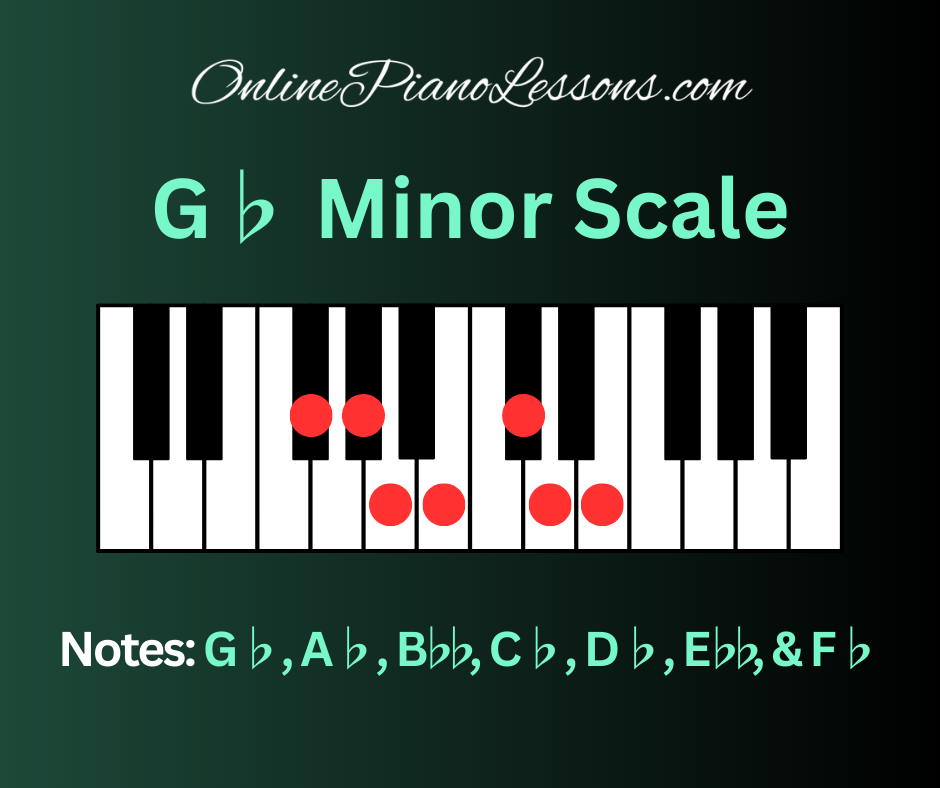
G♭ – A♭ – B♭♭ – C♭ – D♭ – E♭♭ – F♭ – G♭
The moment you see the G♭ minor scale written this way, one thing becomes clear: it requires double flats (B♭♭ and E♭♭), which makes the scale impractical on the page. That’s the biggest reason why composers favor F♯ minor instead—even though the piano produces the exact same pitches.
Still, the G flat minor scale is a valid theoretical key. Understanding it helps you master enharmonic equivalents, scale construction, and key signatures well beyond beginner theory.
Because the piano does not distinguish between G♭ and F♯ pitches, the G flat minor scale sounds identical to F♯ minor. But the spelling changes how the music is analyzed, and this is what makes the G♭ minor scale valuable to learn.
How The G Flat Minor Scale Works
Even though it is rarely used, the G flat minor scale follows the exact same interval pattern as every other natural minor scale:
Whole – Half – Whole – Whole – Half – Whole – Whole
When spelled correctly, the G flat minor scale preserves the integrity of note names (G♭ as tonic, then A♭, B, C, D, E, F). Because of those letter requirements, accidentals become necessary to fit the minor pattern, leading to the double flats that make the G♭ minor scale unique.
From a functional standpoint, the harmonic and melodic forms also behave just like any other minor key:
Harmonic G♭ minor scale:
G♭ – A♭ – B♭♭ – C♭ – D♭ – E♭♭ – F – G♭
(raised 7th: F♭ → F♮)
Melodic G♭ minor scale (ascending):
G♭ – A♭ – B♭♭ – C♭ – D♭ – E♭ – F – G♭
(raised 6th and 7th: E♭♭ → E♭ and F♭ → F♮)
Melodic G♭ minor scale (descending):
G♭ – F♭ – E♭♭ – D♭ – C♭ – B♭♭ – A♭ – G♭
(reverts to natural minor)
These theoretical forms help you understand voice-leading, functional harmony, and cadences, even though the G flat minor scale isn’t printed often.
Why The G Flat Minor Scale Is Rarely Written
While the G flat minor scale is valid, the issue is readability. Double flats create unnecessary confusion for performers. Nearly all composers choose the enharmonic F♯ minor key signature, which contains only three sharps (F♯, C♯, G♯). It is dramatically easier to read than a key signature containing six flats plus double flats.
Still, the G flat minor scale matters on the piano because:
- It improves theoretical fluency.
- It helps students understand enharmonic equivalents.
- It strengthens your grasp of minor scale construction.
- It supports transposition tasks in advanced music theory.
- It adds depth to your piano knowledge when learning obscure keys.
Even though the G♭ minor scale rarely appears in sheet music, learning it deepens your musicianship.
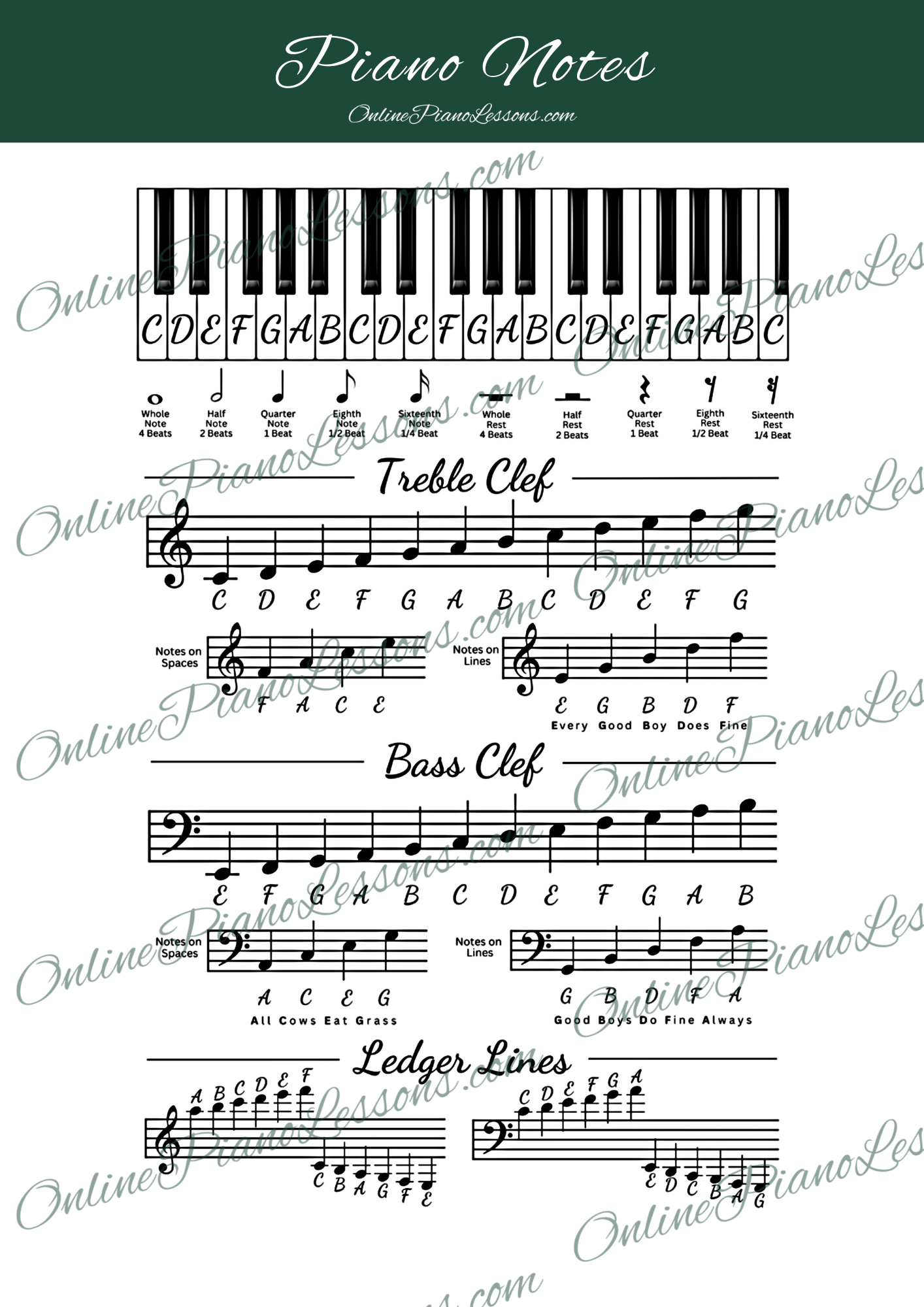
How To Find G Flat Minor On The Piano
On the piano, locating the G flat minor scale is straightforward because you don’t have to worry about double flats—the instrument produces the same sound as F♯ minor.
To find G♭ (the tonic), look for the black key immediately to the left of G natural. This is your home note. The rest of the G flat minor scale uses the same keys you would play for the F♯ minor scale:
G♭ (F♯) – A♭ (G♯) – B♭♭ (A) – C♭ (B) – D♭ (C♯) – E♭♭ (D) – F♭ (E) – G♭ (F♯)
In practical piano performance, you simply think of the F♯ minor layout. But knowing the G♭ minor scale’s correct spelling helps you understand advanced notation even if you never see it written in a score.
Fingerings For The G Flat Minor Scale
Because the G flat minor scale sounds the same as F♯ minor, piano fingering follows F♯ minor conventions.
Right Hand (1 octave, ascending):
2 – 3 – 4 – 1 – 2 – 3 – 4 – 1
Start on G♭ with finger 2 for smooth black-key navigation.
Left Hand (1 octave, ascending):
4 – 3 – 2 – 1 – 3 – 2 – 1 – 4
The pattern works naturally on the piano because many notes of the G♭ minor scale fall on black keys and align well with longer fingers. If you can comfortably play the F♯ minor scale, then you can just as comfortably play the G♭ minor scale.
Chords Built From The G Flat Minor Scale
Below are the diatonic triads of the G flat minor scale in natural minor form (spelled theoretically, not by piano enharmonics):
- i — G♭ minor: G♭–B♭♭–D♭
- ii° — A♭ diminished: A♭–C♭–E♭♭
- III — B♭♭ major: B♭♭–D♭–F♭
- iv — C♭ minor: C♭–E♭♭–G♭
- v — D♭ minor: D♭–F♭–A♭♭
- VI — E♭♭ major: E♭♭–G♭–B♭♭
- VII — F♭ major: F♭–A♭–C♭
This layout makes the G♭ minor scale difficult to read but excellent for theoretical training.
On the piano, however, these same chords are played exactly as their F♯ minor equivalents. Practicing them gives you a deeper understanding of minor harmony without the confusion of written double flats.

What The G Flat Minor Scale Sounds Like
Despite its complex notation, the G flat minor scale has a beautiful and expressive sound on the piano. It shares the same sonority as F♯ minor:
- Melancholic
- Dark
- Softly tense
- Expressive and lyrical
- Popular in film music
- Comfortable for improvisation
The lowered third, sixth, and seventh degrees of the G flat minor scale create a natural minor mood that works beautifully for emotional melodies and atmospheric piano textures.
Practice Strategies For G Flat Minor
Even though the G♭ minor scale is theoretically complex, practicing it on the piano is simple.
1. Hands-Separate Warmup
Play the G flat minor scale slowly, hands separately, in two octaves. Focus on relaxed thumb crossings and clear tone.
2. Include All Three Forms
Practice natural, harmonic, and melodic versions of the G flat minor scale. This builds a full understanding of minor scale function.
3. Arpeggio Training
Practice G♭ minor arpeggios and broken chords. Because the piano shape lines up with F♯ minor, these motions feel very smooth under the hands.
4. Progressions
Try simple harmonic loops such as:
i – iv – v – i
or
i – VI – III – VII
These capture the emotional core of the G flat minor scale.
5. Improv Exercises
Improvise short melodies in the G♭ minor scale on the piano to internalize the sound of the key.
Why Pianists Should Still Learn G Flat Minor
Even though the G flat minor scale rarely appears in printed music, learning it offers real benefits:
- Strengthens theoretical mastery
- Deepens understanding of enharmonic keys
- Builds confidence in rare key centers
- Prepares you for advanced transposition exercises
- Expands your ability to analyze complex scores
- Improves piano fluency in flat-based keys
The G♭ minor scale may not be common, but the knowledge you gain from studying it applies everywhere in piano playing and music theory.
FAQ
Why is the G flat minor scale rarely used in sheet music?
Because it requires double flats, making it difficult to read. Composers nearly always write F♯ minor instead.
Does the G♭ minor scale sound different from F♯ minor?
No—on the piano they sound identical. The difference is only in notation.
How many flats would be in the G flat minor key signature?
Theoretically, it would require six flats plus the use of double flats in the scale itself.
Should piano students learn the G flat minor scale?
Yes. Even though it’s rarely written, it improves your theory knowledge and enhances your understanding of minor scale structures.
What chords come from the G flat minor scale?
Theoretically: G♭ minor, A♭ diminished, B♭♭ major, C♭ minor, D♭ minor, E♭♭ major, and F♭ major.

 Hi, I'm Thomas, Pianist Composer,
  I love playing piano, creating new melodies and songs, and further developing my online piano course and making updates/additions to my site OnlinePianoLessons.com!
  Now that is what I call fun!