Get Full Access (Only $5/mo)

Flat scales are one of the foundational elements of learning the piano. Any time you see a “♭” symbol in sheet music or a key signature with flats, you are being guided toward a set of notes built around this concept. Flat scales appear in major keys, minor keys, jazz harmonies, classical compositions, gospel progressions, film music, and countless modern styles. The more you understand how flat scales work, the easier it becomes to read music, recognize patterns, and feel comfortable across every region of the keyboard.
This definitive guide explores what flat scales are on the piano, how they function, how to find them, how major and minor flat scales differ, and how to use these patterns throughout your piano practice.

Throughout this guide, you’ll see the keywords flat scales and piano used naturally as we explore the full landscape of flat-based keys and how to play them smoothly.
What Flat Scales Are
Flat scales are scales that contain one or more flat notes—pitches lowered by a half step. In the context of the piano, flat scales often refer to key signatures that use flats instead of sharps. For example, keys such as B♭ major, E♭ major, and A♭ major are all flat-based scales commonly encountered in classical, jazz, blues, and pop music.
Every major and minor key on the piano exists with either sharps, flats, or no accidentals at all. Flat scales simply represent the group of scales that are built using the flat side of the Circle of Fifths.
Understanding flat scales helps you intuitively recognize finger patterns, develop muscle memory, and play comfortably in keys that many pianists initially find intimidating due to the abundance of black keys.
How Flat Scales Work on the Piano
Flat scales work by following the same whole-step/half-step formulas used by all Western major and minor scales:
- Major scale formula: W–W–H–W–W–W–H
- Natural minor scale formula: W–H–W–W–H–W–W
When applied starting on flat notes such as B♭ or E♭, these formulas produce the characteristic patterns of flat scales.
On the piano, flat scales are often easier than they appear because many of them use logical finger groupings and comfortable black-key combinations. This is why advanced pianists frequently prefer flat keys for smooth, ergonomic performance, especially in jazz.
How to Find Flat Scales
There are three main methods to identify or construct flat scales on the piano:
1. Using the Circle of Fifths
Flat scales appear when you move counterclockwise on the Circle of Fifths. Each step adds one flat in the key signature.
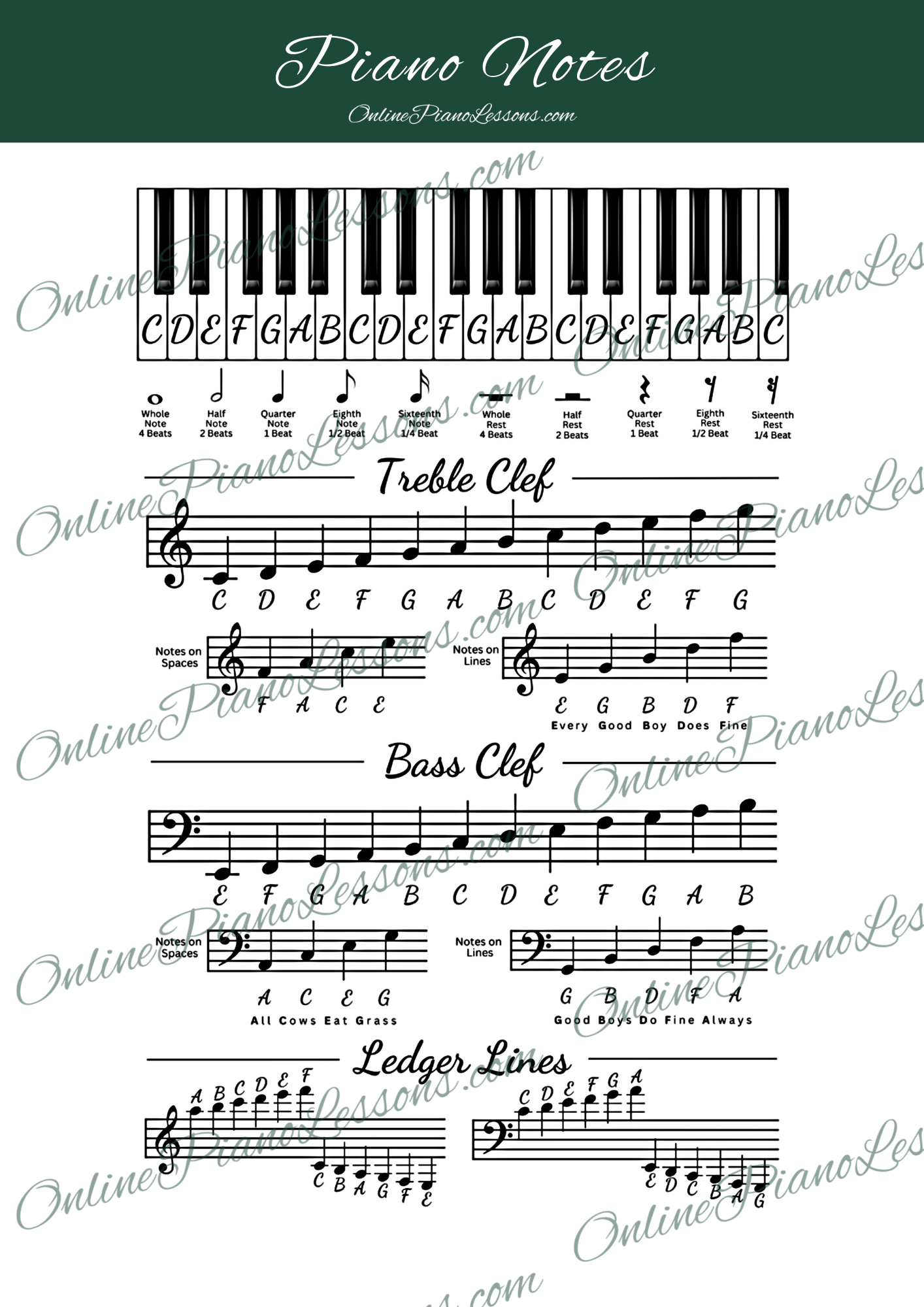
The order of flats is always: B♭, E♭, A♭, D♭, G♭, C♭, F♭.
2. Using the Half-Step Approach
Take any natural note and lower it by a half step using the nearest black key.
Examples:
- A → A♭
- D → D♭
- G → G♭
Then build a major or minor scale using the standard scale formulas.
3. Recognizing Key Signatures
Flat scales have key signatures with flats in them.
For example:
- Two flats = B♭ major or G minor
- Five flats = D♭ major or B♭ minor
This approach becomes automatic as you see more sheet music on the piano.
Major Flat Scales on the Piano
Below is a breakdown of each major scale containing flats. All of these follow the major scale formula and help you develop comfort playing in flat keys on the piano.
F Major (1 Flat)
-
Notes: F, G, A, B♭, C, D, E, F
This is the simplest of the flat scales and a great introduction to reading a single flat on the piano.
B♭ Major (2 Flats)
-
Notes: B♭, C, D, E♭, F, G, A, B♭
A very common key in band, orchestral, and jazz music.
E♭ Major (3 Flats)
-
Notes: E♭, F, G, A♭, B♭, C, D, E♭
One of the most frequently used flat scales, especially in jazz and gospel.
A♭ Major (4 Flats)
-
Notes: A♭, B♭, C, D♭, E♭, F, G, A♭
Smooth, warm, and highly pianistic due to its ergonomic fingerings.
D♭ Major (5 Flats)
-
Notes: D♭, E♭, F, G♭, A♭, B♭, C, D♭
Famous for its rich tone and comfortable layout on the piano.
G♭ Major (6 Flats)
-
Notes: G♭, A♭, B♭, C♭, D♭, E♭, F, G♭
Despite its many flats, this key actually feels very natural on the hands.
C♭ Major (7 Flats)
-
Notes: C♭, D♭, E♭, F♭, G♭, A♭, B♭, C♭
Rare in beginner repertoire but valuable for understanding enharmonics.
Each of these major flat scales forms the backbone of many piano compositions and develops necessary fluency in reading flats.
Minor Flat Scales on the Piano
Every major flat scale has a related relative minor, also built using flats. These minor flat scales help pianists understand darker tone colors and broaden expressive depth.
D Minor (1 Flat)
Relative minor of F major.
Notes: D, E, F, G, A, B♭, C, D
G Minor (2 Flats)
Relative minor of B♭ major.
Notes: G, A, B♭, C, D, E♭, F, G
C Minor (3 Flats)
Relative minor of E♭ major.
Notes: C, D, E♭, F, G, A♭, B♭, C
F Minor (4 Flats)
Relative minor of A♭ major.
Notes: F, G, A♭, B♭, C, D♭, E♭, F
B♭ Minor (5 Flats)
Relative minor of D♭ major.
Notes: B♭, C, D♭, E♭, F, G♭, A♭, B♭
E♭ Minor (6 Flats)
Relative minor of G♭ major.
Notes: E♭, F, G♭, A♭, B♭, C♭, D♭, E♭
A♭ Minor (7 Flats)
Relative minor of C♭ major.
Notes: A♭, B♭, C♭, D♭, E♭, F♭, G♭, A♭
Minor flat scales deepen your overall ability to express emotion and navigate diverse sound worlds on the piano.

Why Flat Scales Matter for Piano Players
Flat scales are essential for anyone serious about the piano, whether your focus is classical technique, jazz improvisation, or contemporary songwriting. They help:
- Strengthen finger coordination and fluidity
- Improve reading fluency in flat key signatures
- Expand improvisational freedom
- Build comfort with black-key patterns
- Support playing alongside wind and brass instruments, which often use flat keys
- Develop professional-level key versatility
Mastering flat scales expands your musical vocabulary and ensures you are not limited to “easy” keys.
Tips for Practicing Flat Scales
- Practice slowly with correct fingering patterns
- Use a metronome to build evenness and control
- Play hands separately before combining
- Rotate between major and minor flat scales each session
- Visualize black-key groupings before playing
- Practice flat scales in contrary motion for added dexterity
With consistency, flat scales become second nature on the piano.
FAQ
What are flat scales on the piano?
Flat scales are major or minor scales that include flat notes, making them part of the flat side of the Circle of Fifths.
Why are some piano keys written with flats instead of sharps?
Certain keys naturally function better with flats based on harmonic spelling and the Circle of Fifths.
Are flat scales harder than sharp scales?
Not necessarily. Many flat scales feel more ergonomic due to their reliance on black keys.
How many flat scales are there?
There are seven major flat scales and seven minor flat scales, totaling fourteen flat-based keys.
Do I need to learn flat scales to get good at the piano?
Yes—flat scales dramatically improve technique, reading ability, and musical versatility.

 I love playing piano, creating new melodies and songs, and further developing my online piano course and making updates/additions to my site OnlinePianoLessons.com!
  Now that is what I call fun!