


If you want to elevate your piano playing, mastering arpeggios is a crucial step. An arpeggio is more than just a series of notes—it’s a technique that shapes the way music flows and expresses emotion. Understanding how arpeggios work on the piano, the many ways they can be performed, and their role in music history will give you a deeper appreciation for both technique and musicality. In this guide, we’ll explore everything you need to know about arpeggios, practical tips for piano practice, and their importance in shaping piano music.
What is an Arpeggio?
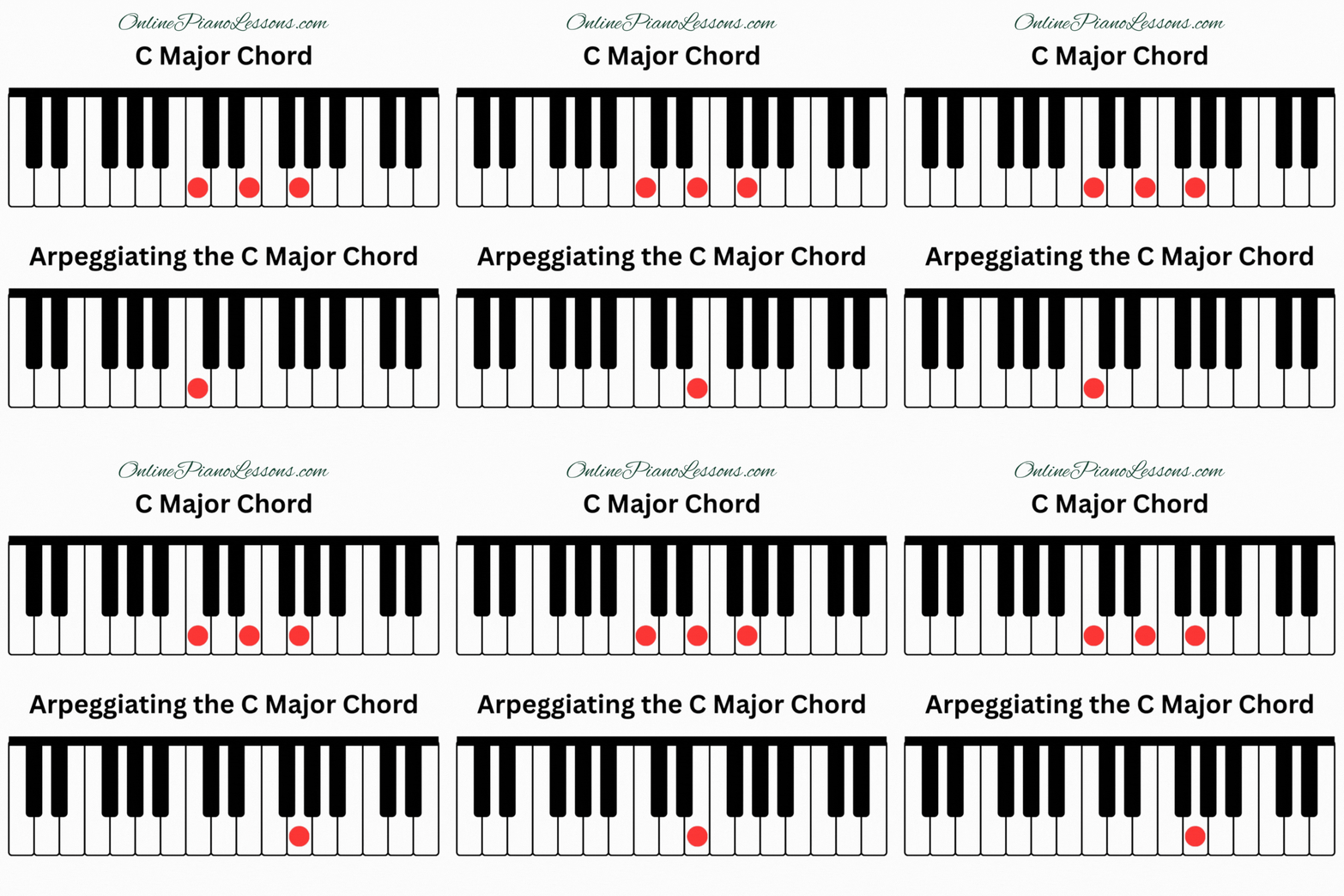
An arpeggio is a sequence of notes from a chord played individually, rather than simultaneously. Unlike playing a chord all at once, an arpeggio allows each note to resonate, creating a flowing, melodic effect. On piano, this often involves spreading your fingers across several keys to play the notes in ascending or descending order.
For example, a C major chord consists of the notes C, E, and G. Playing them together forms a chord, but performing them one after another produces a C major arpeggio. Arpeggios are foundational for both classical and contemporary piano techniques, making them an essential skill for pianists.
How Arpeggios Work on the Piano
On piano, arpeggios are executed by pressing the notes of a chord in sequence. The key aspects of arpeggio technique include:
- Finger Placement: Proper hand positioning ensures smooth transitions between notes. Pianists often use the thumb and fingers to create fluid motion up and down the keyboard.
- Smooth Motion: Each note should be connected and evenly spaced, giving the arpeggio a flowing, melodic quality.
- Rhythmic Accuracy: Arpeggios are often used in scales, exercises, and musical passages where timing is critical. Practicing them with a metronome helps maintain consistent tempo.
- Variation in Direction: Arpeggios can be ascending, descending, or even alternating patterns, providing versatility in performance.
Types of Arpeggios
Arpeggios come in many forms, and understanding these variations expands your musical vocabulary:
- Major and Minor Arpeggios
The simplest arpeggios are based on major or minor chords. For example, C major arpeggio: C-E-G, and A minor arpeggio: A-C-E. These are essential for beginners and form the foundation for more complex patterns. - Seventh Chord Arpeggios
Adding a seventh to a chord increases its harmonic richness. For instance, a G7 arpeggio consists of G-B-D-F. Practicing these arpeggios helps pianists tackle jazz, blues, and classical repertoire. - Inverted Arpeggios
By starting the arpeggio on a note other than the root, you create inverted arpeggios. For example, E-G-C is a first inversion of a C major chord. This technique is useful for smoother transitions between chords in music. - Extended Arpeggios
Advanced arpeggios might extend over multiple octaves or include added notes like ninths or thirteenths. Pianists often use these in virtuosic pieces and improvisation.
Importance of Arpeggios in Music
Arpeggios are a vital component of piano playing for several reasons:
- Technical Mastery
Practicing arpeggios strengthens finger independence, hand coordination, and agility. They are a cornerstone of technique in both classical and contemporary piano education. - Musical Expression
Arpeggios allow chords to be expressed melodically. Many pieces rely on arpeggiated chords to convey emotion, tension, or motion within a composition. - Improvisation and Composition
Understanding arpeggios helps pianists improvise and compose music, as they provide a framework for melodic and harmonic development. - Historical Relevance
Arpeggios have been a prominent feature in piano music for centuries. From the baroque period, with composers like Bach, to romantic piano works by Chopin and Liszt, arpeggios have shaped expressive piano writing. Modern pop and jazz also make extensive use of arpeggios.
How to Practice Arpeggios on the Piano
Here are some tips for effectively practicing arpeggios:
- Start Slow: Begin at a comfortable tempo, focusing on accuracy and smoothness rather than speed.
- Use a Metronome: Maintaining a consistent tempo helps develop rhythmic precision.
- Practice Both Hands Separately: Before combining hands, master the arpeggio with each hand individually.
- Gradually Increase Octaves: Start with one octave and then expand to two or more as your technique improves.
- Focus on Fingerings: Use proper fingering to avoid tension and create fluid motion. For example, in a C major arpeggio ascending with the right hand, use 1 (thumb) on C, 2 on E, and 3 on G.
Common Uses of Arpeggios in Piano Music
- Classical Pieces: Many sonatas, preludes, and études feature arpeggios as a central technical or musical element.
- Romantic Compositions: Composers like Chopin and Liszt frequently use arpeggios for dramatic effect.
- Jazz and Pop: Arpeggios are fundamental in jazz improvisation and can add harmonic depth in pop ballads.
- Accompaniment Patterns: Pianists often use arpeggiated chords to accompany singers or other instruments.
Advanced Arpeggio Techniques
Once you’re comfortable with basic arpeggios, you can explore advanced techniques:
- Broken Arpeggios: Playing chord notes in irregular patterns for rhythmic variation.
- Cross-Hand Arpeggios: Using one hand to cross over the other for extended arpeggio ranges.
- Arpeggios with Pedaling: Combining arpeggios with the sustain pedal enhances resonance and musicality.
Conclusion: Arpeggios on the Piano
Arpeggios are an essential part of piano playing that enhance technique, expression, and musical understanding. By mastering arpeggios, pianists gain a deeper connection to the keyboard, improve hand coordination, and unlock a world of musical possibilities. Whether you are practicing classical sonatas or improvising jazz, arpeggios remain a powerful tool in every pianist’s toolkit.
FAQ
What is the difference between a chord and an arpeggio?
A chord is multiple notes played simultaneously, while an arpeggio is the same notes played in sequence.
Why are arpeggios important for piano technique?
Practicing arpeggios strengthens finger independence, coordination, and agility while improving musical expression.
Can arpeggios be used in all music genres?
Yes. Arpeggios are found in classical, jazz, pop, rock, and even electronic music.
How do I know which arpeggios to practice?
Start with major and minor arpeggios in all keys, then progress to seventh chords, inversions, and extended arpeggios.
How often should I practice arpeggios on piano?
Daily practice, even for a few minutes, is highly effective for building technique and familiarity with the keyboard.

 I love playing piano, creating new melodies and songs, and further developing my online piano course and making updates/additions to my site OnlinePianoLessons.com!
  Now that is what I call fun!