Get Full Access (Only $5/mo)

If you’re learning piano, one of the first questions you may have is: where is middle C on the piano? Middle C is a fundamental reference point for pianists of all levels. Not only does it help with hand positioning, but it also plays a crucial role in reading music, understanding scales, and navigating the keyboard. In this guide, we’ll explore exactly where middle C is on the piano, techniques to find it quickly, its importance in music, and tips for beginners.

Understanding the Layout of the Piano
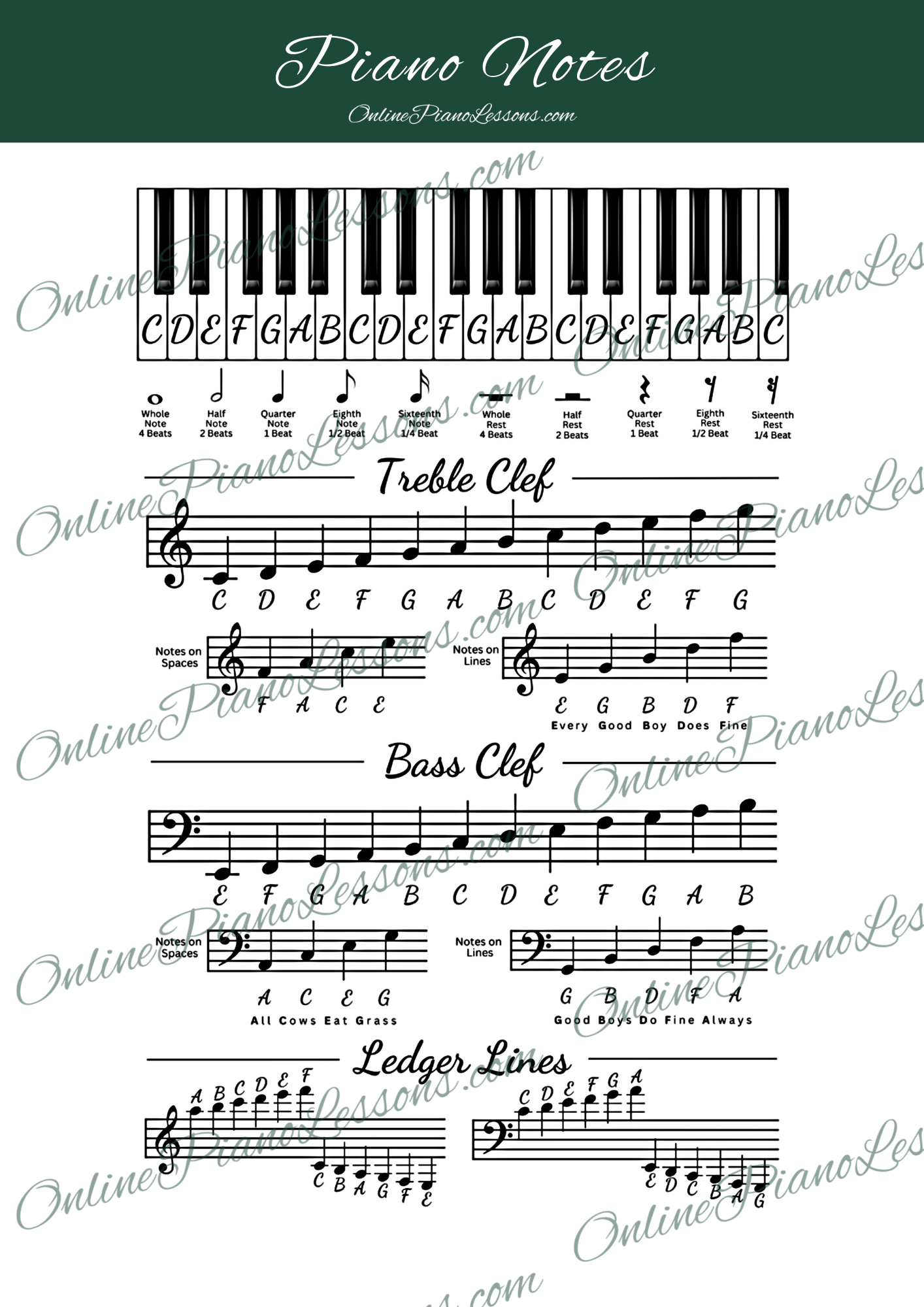
A standard piano has 88 keys, which are divided into white and black keys. The white keys represent the natural notes (C, D, E, F, G, A, B), while the black keys are sharps and flats. These keys are arranged in repeating patterns of seven white keys and five black keys per octave. Knowing where middle C on the piano is helps you navigate these patterns and locate notes accurately.
Middle C is roughly at the center of the keyboard. On an 88-key piano, it is the fourth C key from the left. It acts as a visual and auditory anchor for pianists, especially beginners, allowing for proper hand placement and better understanding of musical notation.
How to Easily Find Middle C on the Piano
Here are some simple methods to quickly identify middle C:
- Locate the Set of Two Black Keys
Middle C is the white key immediately to the left of a group of two black keys near the center of the keyboard. The black keys are arranged in repeating groups of twos and threes, making it easy to find middle C once you know the pattern. - Count the Keys from the Left
On an 88-key piano, you can count from the left side to find middle C. It is the fourth C key, making it a reliable reference point. - Use the Center of the Keyboard
Middle C is located near the physical center of the keyboard. If you sit in the middle, you’ll find middle C conveniently under your right hand, making it a natural starting point for many exercises. - Visualize Octave Patterns
Each octave starts with C. By identifying any C on the keyboard and counting the octaves, you can find middle C with ease. This method is especially useful for players using keyboards of various sizes.
Why Middle C is Important
Middle C serves as a central reference in multiple aspects of piano playing and music theory:
- Reading Sheet Music
Middle C is the dividing line between the treble and bass clefs. Notes above middle C are usually played with the right hand, while notes below are played with the left hand. Knowing where middle C on the piano is allows for quicker reading and more accurate playing. - Learning Scales and Chords
Many beginner exercises and scales start from middle C. Practicing C major scales, chords, and simple songs from this note strengthens hand coordination and familiarity with the keyboard. - Hand Positioning
Middle C helps pianists position their hands correctly. For basic exercises, your right thumb is often placed on middle C, with fingers spanning the next four notes. Proper placement improves technique and prevents strain. - Pitch Reference
Middle C has a standardized pitch of 261.63 Hz and serves as a tuning reference. Musicians often use it to check pitch accuracy and develop an internal sense of relative pitch.
Tips for Beginners to Remember Middle C
- Visual Markers: Beginners can place a small sticker on middle C until its location becomes familiar.
- Practice Scales: Repeatedly playing scales from middle C reinforces its position.
- Mnemonic Devices: Remembering that middle C is “in the middle of the piano” can help with orientation.
- Learn Patterns: Recognizing the repeating groups of two and three black keys makes locating middle C faster.
Differences on Various Keyboards
Middle C is consistent in pitch but its physical position may vary on keyboards with fewer than 88 keys:
- 61-Key or 76-Key Keyboards: Middle C is still near the center but may not align exactly with the keyboard’s middle.
- Digital Keyboards: Some models label middle C directly, making it easier for learners to identify.
- Mini Keyboards: While physically shifted, middle C’s musical function remains the same.
Regardless of the keyboard size, knowing where middle C on the piano is provides a reliable anchor for learning music.
Common Mistakes About Middle C
- Confusing Octaves: Beginners sometimes mistake other C notes for middle C. Remember, middle C is the central reference.
- Ignoring Proper Hand Placement: Not placing the thumb on middle C when learning basic exercises can affect finger positioning.
- Relying Only on Labels: While labeled keyboards help, it’s important to recognize middle C by pattern and position.

Practice Exercise to Find Middle C
Try this simple exercise to reinforce middle C:
- Sit at the center of your piano.
- Locate the group of two black keys near the middle.
- Press the white key immediately to the left — this is middle C.
- Place your right thumb on middle C and play the next four notes with your other fingers.
- Repeat until you can find middle C without looking.
This drill will make locating middle C second nature.
Conclusion: Where is Middle C on the Piano?
Knowing where middle C on the piano is forms the foundation for piano playing. By mastering its location, you improve reading skills, hand positioning, and overall musical understanding. With practice, middle C will become second nature, and navigating the keyboard will feel effortless.
FAQ
How can I tell I’m playing middle C and not another C?
Middle C is near the center of the keyboard and immediately to the left of a set of two black keys. Counting keys from the left can also confirm it.
Why is it called middle C?
Because it sits approximately in the middle of the piano’s range, serving as a central reference point for music notation and hand positioning.
Does middle C always have the same pitch?
Yes. Middle C corresponds to a standardized pitch of 261.63 Hz.
Do all keyboards have middle C?
Yes, even smaller keyboards include middle C, though its position may shift relative to the total keys.
Why is middle C important for beginners?
It serves as a visual, tactile, and auditory reference that helps with reading music, scales, chords, and hand positioning.

 I love playing piano, creating new melodies and songs, and further developing my online piano course and making updates/additions to my site OnlinePianoLessons.com!
  Now that is what I call fun!