

When learning to play the piano, most beginners naturally focus on their right hand—the hand that often plays melodies and catchy lines. But the left hand piano notes are just as important, forming the harmonic and rhythmic foundation of nearly every song you’ll ever play. Whether you’re reading from sheet music or improvising chords, your left hand gives your music depth, balance, and fullness.
In this complete guide, we’ll explore exactly what the left hand piano notes are, where they sit on the keyboard, how to use them effectively, and proven strategies to strengthen your left hand technique. By the end, you’ll understand not only which notes to play with your left hand, but why they matter and how to make them sound powerful and expressive.

Understanding Left Hand Piano Notes
The left hand piano notes are generally all the keys located to the left of Middle C. On the piano, Middle C divides the keyboard roughly in half—everything to the left produces lower (bass) pitches, while everything to the right produces higher (treble) pitches.
Your left hand usually plays the bass side, where the sound is deep and resonant. These notes support the melody that your right hand plays, providing harmony, rhythm, and structure.
In other words, the left hand piano notes are your music’s foundation—comparable to a bass guitarist in a band or the lower strings in an orchestra.
Where Middle C Is and Why It Matters
Before mastering left hand piano notes, you must locate Middle C.
- On a standard 88-key piano, Middle C is the fourth C from the left.
- It sits just below the middle of the keyboard and serves as a reference point for all other keys.
Once you find Middle C, move your hand one or two octaves lower—that’s the typical territory for the left hand piano notes. These lower keys have a rich, full sound ideal for playing bass lines and chords that anchor the harmony.
The Role Of The Left Hand On Piano
The left hand piano notes serve several key purposes in most music:
- Bass Lines:
The left hand often plays single notes outlining the root of each chord, much like a bass player does. - Chords:
You might play entire chords or chord shells (like just the root and fifth). This provides harmonic support beneath the melody. - Arpeggios:
The left hand frequently breaks chords into flowing arpeggios, moving one note at a time to create a smooth, continuous pattern. - Rhythmic Drive:
In many styles, the left hand sets the groove, whether it’s a steady waltz pulse, a syncopated jazz rhythm, or a rolling pop accompaniment.
Without strong left hand piano notes, even a beautiful melody can sound empty or incomplete.
Common Left Hand Note Patterns
There are several tried-and-true ways to play left hand piano notes that sound professional and well-balanced:
1. Root and Fifth (Power Notes)
This pattern uses just two notes: the root of the chord and the note a fifth above it.
Example: For a C major chord, play C and G.
This approach is common in pop, rock, and gospel because it’s simple yet powerful.
2. Block Chords
Play full triads or seventh chords in the left hand (for instance, C–E–G or C–E–G–B). This creates a lush harmonic bed for your right hand melody.
3. Broken Chords (Arpeggios)
Instead of playing all chord notes at once, play them one at a time in a repeating pattern (C–E–G–E–C). This gives motion and texture to the accompaniment.
4. Alberti Bass
A classical left-hand pattern where you alternate low–high–middle–high (for example, C–G–E–G). This pattern is found in countless pieces by Mozart and Beethoven.
5. Walking Bass
A jazzy approach where the left hand piano notes move smoothly from one chord root to the next, often in stepwise motion or using chord tones.
Practicing these left-hand patterns will build muscle memory and rhythmic precision while teaching you how to make your music sound fuller and more professional.
Proper Hand Position for Left Hand Notes
To play left hand piano notes comfortably and efficiently:
- Keep your wrist relaxed and slightly above the keys.
- Curve your fingers naturally, like you’re holding a small ball.
- Avoid tension—let your arm weight help press the keys rather than forcing your fingers to do all the work.
- Keep your thumb slightly under the hand to allow smooth transitions when crossing over or playing wider intervals.
Good posture and technique are essential because tension in the left hand can lead to uneven sound and fatigue.
Developing Strength and Independence
Many beginners find the left hand weaker or less coordinated than the right. Here are proven exercises to strengthen your left hand piano notes:
- Five-Finger Drills:
Play C–D–E–F–G with fingers 5–4–3–2–1, then back down. Do this slowly in multiple octaves. - Hanon Exercises:
These technical etudes are designed to build agility and uniformity between both hands. Focus on clean, even sound in the left hand. - Scales and Arpeggios:
Practice major and minor scales, starting with the left hand alone. This develops control and confidence. - Alternating Hands Practice:
Play simple melodies with both hands alternating. This strengthens timing and coordination between the hands. - Play Simple Bass Lines:
Practice basic chord progressions (like C–Am–F–G) using just single bass notes in the left hand. Gradually expand to fuller voicings.
Regular, mindful practice will make your left hand piano notes smoother, stronger, and more rhythmically secure.
How To Read Left Hand Notes In Sheet Music
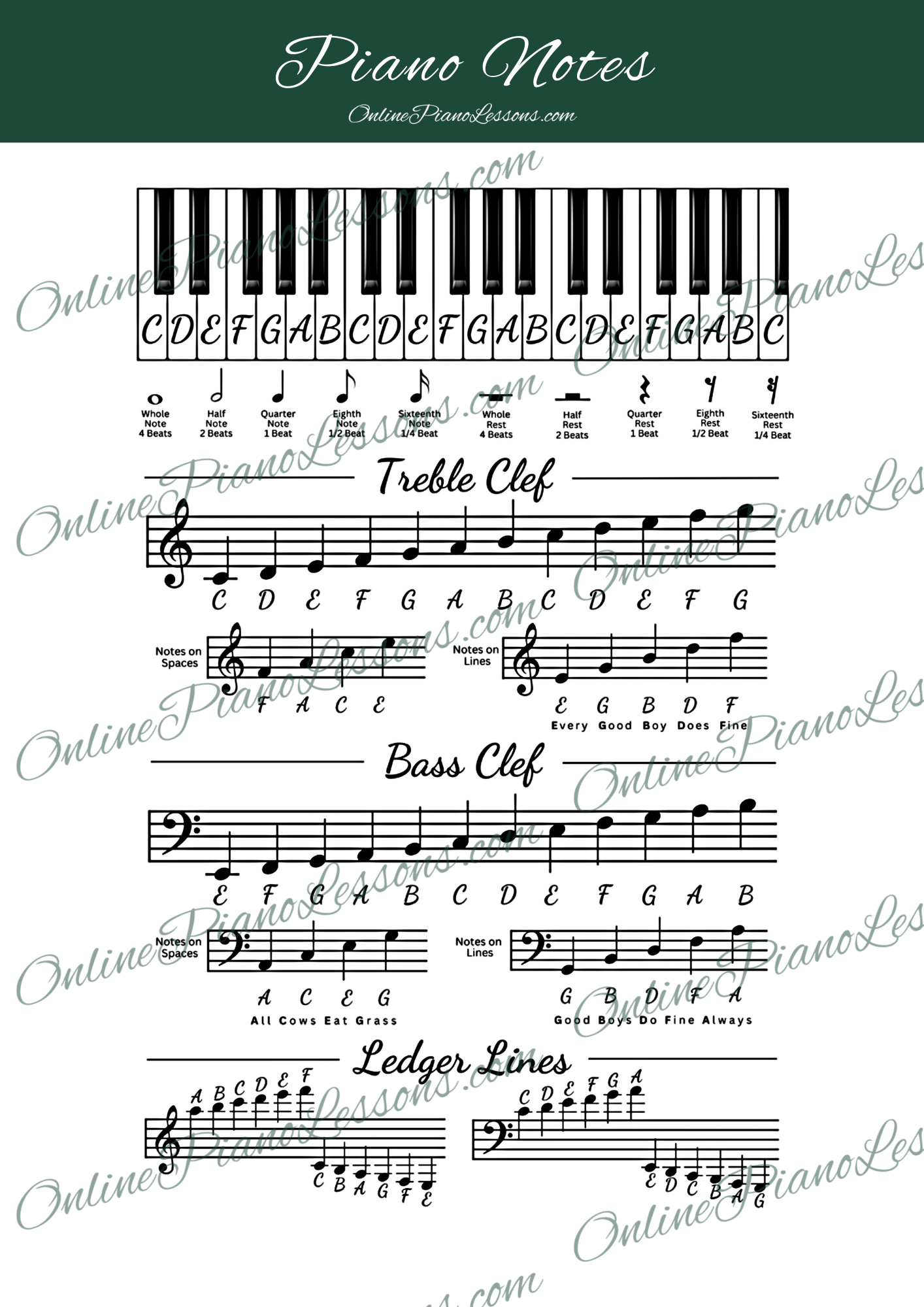
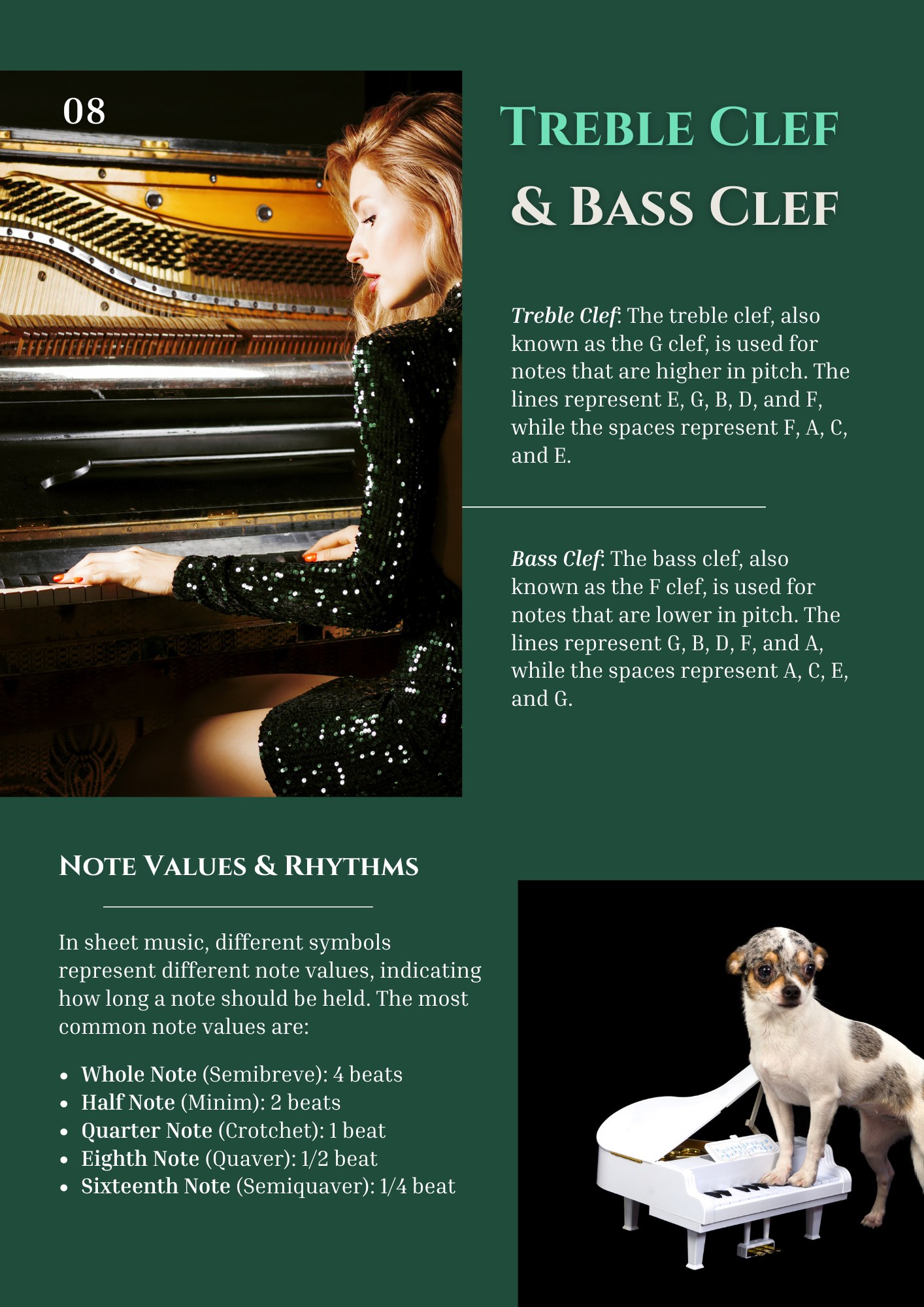
In piano notation, the left hand usually reads from the bass clef, which is marked by the symbol that looks like a backward “C” with two dots.
The bass clef indicates notes below Middle C. For example:
- Middle C is on a line just above the staff.
- The space below that line is B, the line below is A, and so on.
Learning to read the bass clef fluently is essential for understanding left hand piano notes. Many students find it helps to practice sight-reading short bass lines daily to reinforce recognition of lower pitches.

Tips For Playing Left Hand Piano Notes Musically
- Balance the volume: The left hand should usually be quieter than the right to avoid overpowering the melody.
- Shape the phrases: Don’t just play notes mechanically—add dynamics and expression.
- Sync with the rhythm: Keep a steady beat. The left hand often drives tempo, so internalize the rhythm deeply.
- Experiment with pedal use: The sustain pedal can make your left-hand notes resonate beautifully but be careful not to blur harmonies.
The best left hand piano notes support the music subtly and musically rather than drawing too much attention.
Styles That Emphasize Left Hand Playing
The left hand piano notes vary widely across musical genres:
- Classical: Alberti bass, counterpoint, and harmonic support.
- Blues: Walking bass lines and boogie-woogie patterns.
- Jazz: Comping with rootless voicings and chromatic motion.
- Pop and Rock: Simple chord stabs or octave bass lines.
- New Age: Flowing arpeggios and sustained harmonies.
Exploring different genres will teach you how adaptable your left hand can be.
Conclusion: Left Hand Piano Notes
Mastering left hand piano notes takes patience, but the reward is immense: a balanced, expressive, and complete sound that transforms your playing from simple to sophisticated.
The left hand piano notes are the unsung heroes of the keyboard. They provide structure, power, and emotion to every performance. By understanding how the left side of the piano functions, learning the bass clef, and practicing strong patterns, you’ll turn your left hand into a confident partner to your right.
FAQ
What notes should I play with my left hand on piano?
Your left hand typically plays the notes to the left of Middle C—these are lower, bass-range notes used for chords, roots, and accompaniment patterns.
Why is the left hand harder to train than the right hand?
Most people are right-hand dominant, so the left hand naturally feels weaker and less coordinated. Focused practice and repetition help even this out.
How can I make my left hand sound smoother?
Practice slowly, keep your wrist relaxed, and focus on even tone production. Avoid striking keys too hard or unevenly.
Should I always play chords with my left hand?
Not always. Depending on the style, you might play single bass notes, broken chords, or rhythmic patterns instead.
Can I play melodies with my left hand too?
Absolutely. While the left hand often plays accompaniment, it can also take the melody, especially in advanced pieces or for creative exercises.

 Hi, I'm Thomas, Pianist Composer,
  I love playing piano, creating new melodies and songs, and further developing my online piano course and making updates/additions to my site OnlinePianoLessons.com!
  Now that is what I call fun!