Get Full Access (Only $5/mo)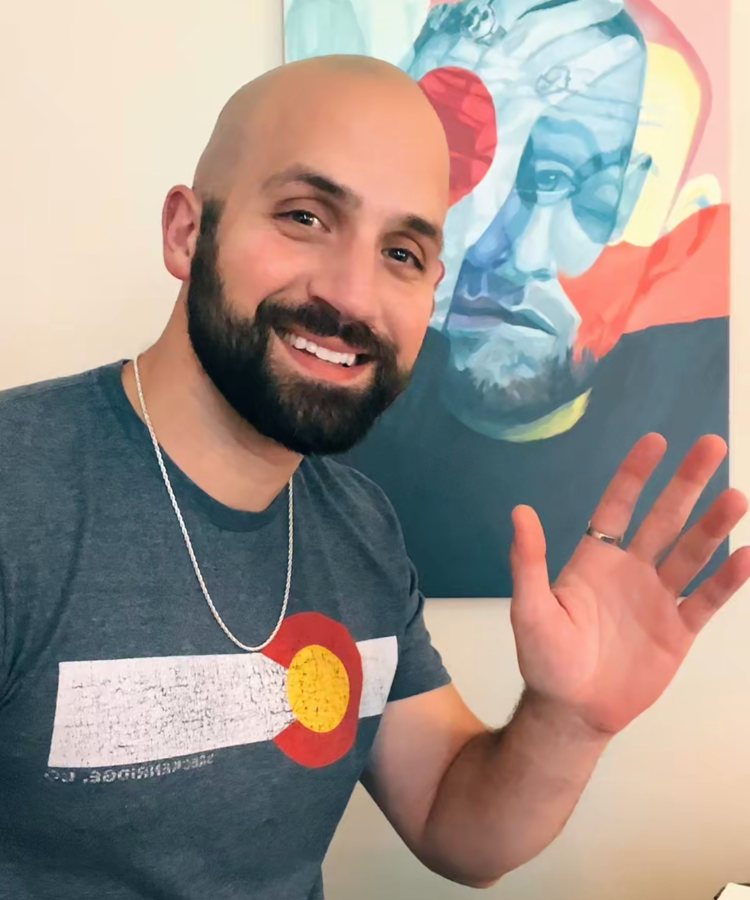

Learning piano is one of the most satisfying skills you can pick up: it blends memory, coordination, rhythm, and emotion into something you can share with others (or keep just for yourself). If you’ve been searching for how to play piano, this guide gives you a clear, practical, and friendly path — from first-contact with the keyboard to playing songs with confidence. I’ll show a step-by-step approach you can follow, explain common pitfalls, and explain why the Piano for Beginners Course on OnlinePianoLessons.com is the most effective and sustainable way to make real progress.
Quick Preview: Learning how to play piano doesn’t have to be complicated or intimidating. This in-depth guide walks you through everything from setting up your instrument and understanding the keys, to reading music, playing chords, and mastering songs step by step. You’ll discover how to build good habits, avoid common mistakes, and stay motivated as you progress.
The post also explains why a structured learning path — like the Piano for Beginners Course at OnlinePianoLessons.com — is the most effective and enjoyable way to learn. It breaks down your journey into easy weekly milestones, shows you what to practice daily, and even includes a full 12-week schedule you can follow.
By the end of this guide, you’ll understand the fundamentals of piano playing, know how to practice efficiently, and feel confident taking your first steps toward becoming the pianist you’ve always wanted to be.

Why Learning Piano Is Worth It
Whether you want to accompany songs, compose, relieve stress, or finally play that piece you love, piano is more than notes on a page. It trains both hands independently, teaches musical structure, and gives immediate, tangible feedback: you press a key, you hear something. If you’re asking how to learn piano because you want results — not just theory — you’ll appreciate the practical focus this guide and the Piano for Beginners Course take.
Getting Started: The Very First Steps
- Decide Your Goal. Be specific. Do you want to play pop songs, classical pieces, or improvise? Knowing the answer shapes how you approach how to play piano.
- Choose an Instrument. Acoustic or digital? For most beginners a modest digital piano or weighted-key keyboard is perfect — it’s affordable, portable, and often has headphone outputs for quiet practice.
- Set Up Your Space. Comfortable bench height, a stand for sheet music or tablet, good lighting. Consistency in your practice space makes following the how to play piano plan easier.
- Start With a Course that Guides You. Trying to assemble lessons from random videos is slow and frustrating. The Piano for Beginners Course on OnlinePianoLessons.com lays out every lesson logically — finger positions, reading, rhythm, and songs — so you can move forward without guesswork.
In-Person Piano Lessons VS My Piano for Beginners Course
| FACTORS | In-Person Piano Lessons | Piano for Beginners Course |
|---|---|---|
| SCHEDULE FLEXIBILITY | Fixed weekly time slot | Learn anytime, 24/7 access |
| LOCATION | Must travel to a teacher’s studio/home | Learn from the comfort of your own home |
| COST | $50–$100+ per lesson | Only $1.17 per lesson (1-time payment of $49 for the Piano for Beginners Course – 42 lessons) |
| PACE OF LEARNING | Set by instructor | Go at your own pace |
| PRACTICE SUPPORT | Limited to weekly sessions | 24/7 Email Support |
| LEARNING MATERIALS | Workbooks, worksheets, and charts may cost extra ($20+) | Everything is included in the Piano for Beginners Course (eBooks, videos, PDFs, audio files, etc.) |
| TEACHER AVAILABILITY | Limited to lesson time | Ask questions anytime via email |
| PROGRESS TRACKING | Rarely included | Built-in lesson tracking and goals |
| STUDENT CONFIDENCE | Can feel pressured or judged | No-pressure environment, perfect for shy learners |
Step-By-Step: How to Learn Piano
Below is a practical sequence you can follow. This is the same structure used in the Piano for Beginners Course, tuned for self-learners and those who want efficient, measurable improvement.
Week 1–2: Orientation and Fundamentals
- Learn the names of the keys and basic hand position.
- Practice simple five-finger patterns and first scales.
- Focus on relaxed hands and basic posture.
Week 3–6: Reading, Rhythm, and Coordination
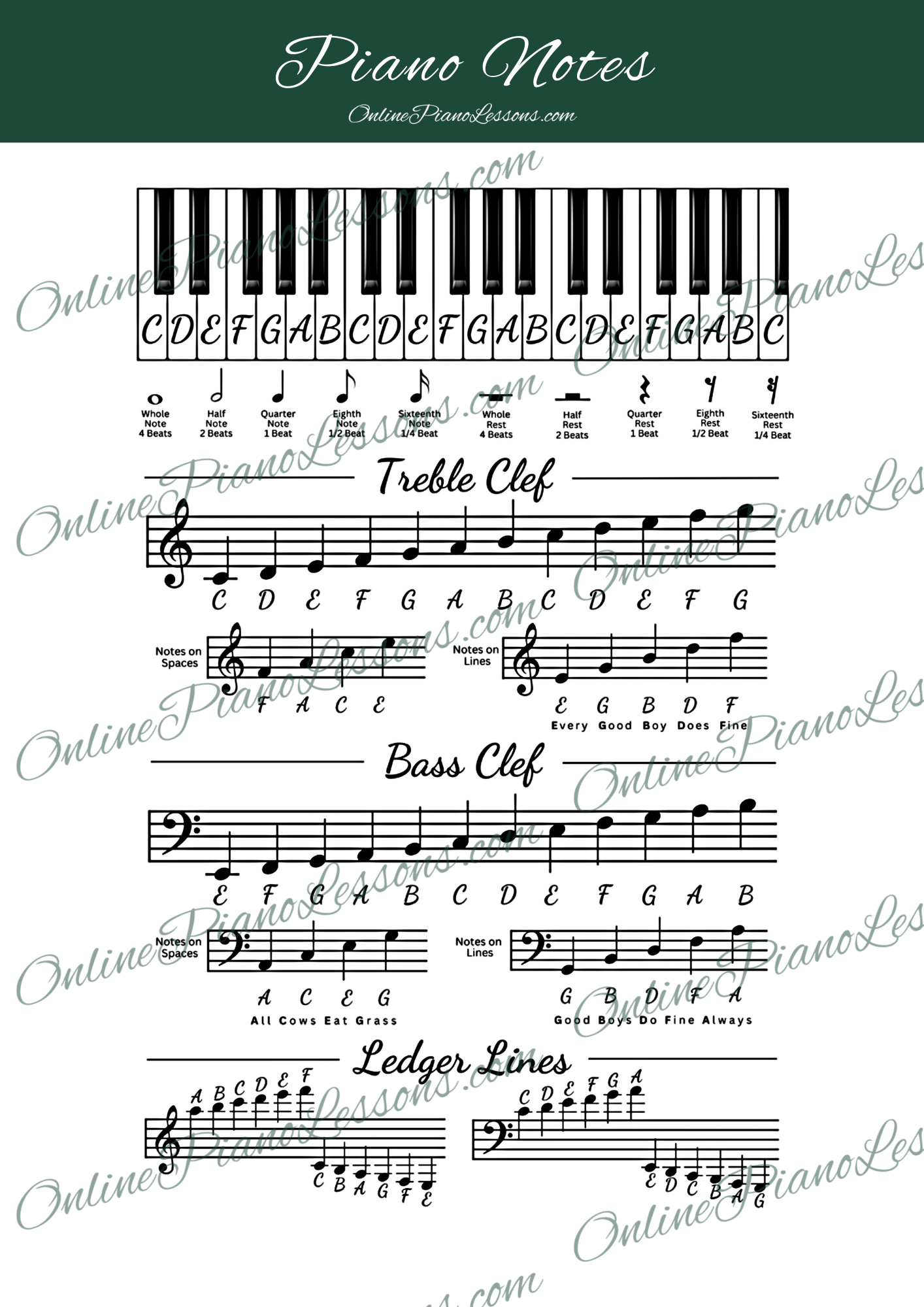
- Read simple notation: beats, measures, and note values.
- Play basic right-hand melodies while tapping the beat with your foot.
- Start simple left-hand accompaniments (single bass notes, basic patterns).
Month 2–3: Chords, Songs, and Dynamics
- Learn primary chords (I, IV, V) and how to use them to accompany songs.
- Practice dynamics (soft vs loud) and simple phrasing.
- Begin playing full songs slowly and gradually increase tempo.
Month 4–6: Technique and Repertoire
- Add scales, arpeggios, and broken-chord patterns to warmups.
- Tackle slightly harder repertoire and begin sight-reading short pieces.
- Work on expressive technique: pedaling, rubato, and articulation.
This scaffolded plan answers the question how to learn piano by breaking big goals into weekly and monthly wins so you don’t get overwhelmed.

Why Follow a Structured Course (Like Piano for Beginners)?
People often ask whether they should use apps, YouTube, or in-person lessons. Here’s why a structured online course — specifically the Piano for Beginners Course on OnlinePianoLessons.com — is often the best answer to how to learn piano for most adults:
- Progression: Lessons are sequenced so each concept builds on the last. You won’t be confused about what comes next.
- Accountability Tools: Checklists and lesson trackers help you practice consistently.
- Teacher-Led Clarity: Video lessons demonstrate fingerings and hand positions more clearly than static tabs or text.
- Song-Centered Learning: You practice technique while playing real songs you enjoy, which keeps motivation high.
- Flexible Pace: Unlike weekly in-person lessons, you can progress at your own speed — but with the same clear structure.
In short: structured study is how to learn piano efficiently without getting stuck on random details.
Daily Practice Routine (30–60 Minutes)
A focused daily plan beats long, unfocused sessions. Here’s a practical routine adapted from the Piano for Beginners Course that answers how to play piano in real practice terms:
- 5 minutes: Warm-up (relaxed stretches, wrist rolls)
- 10 minutes: Scales & technical exercises (slow, accurate)
- 10–20 minutes: New lesson material (follow the course video)
- 10–20 minutes: Repertoire — practice songs with slow tempos, then build speed
- 5 minutes: Cool down — play something you enjoy
Consistency is the secret sauce. Practicing 30 minutes every day will often outperform 2–3 hours once a week when learning how to learn piano.
Common Mistakes and How to Avoid Them
- Rushing Tempo: Playing too fast hides mistakes. Slow, deliberate practice is how to play piano correctly.
- Skipping Fundamentals: Skipping scales and technique limits your future ability. Build the foundation early.
- Inconsistent Practice: Irregular practice stalls progress. Aim for daily mini-sessions.
- Poor Posture: Tension in the shoulders and wrists creates problems. The Piano for Beginners Course emphasizes relaxed posture from day one.
Tools and Gear Recommendations
You don’t need an expensive setup to start learning. Here’s what I recommend:
- 88-key weighted keyboard (or a full acoustic piano if available)
- Adjustable bench for correct hand height
- Sustain pedal (learn how to use it sparingly)
- Headphones for quiet practice
- Tablet or music stand to follow digital sheet music and course lessons
Having the right basics helps you apply everything you learn about how to learn piano.
How to Keep Motivation and Track Progress
- Set mini-goals: Learn a song, master a scale (even a sharp scale), or record yourself weekly.
- Record and review: Recording shows improvement you might not notice day-to-day.
- Join a community: Share progress and get encouragement; the Piano for Beginners Course includes a learner community for feedback and inspiration.
- Play for others: Even small performances help cement skills and make practicing meaningful.
When to Consider a Teacher
Online learning covers the majority of practical questions about how to learn piano. However, if you want highly personalized feedback (e.g., correcting a specific technical issue), occasional one-on-one lessons can supplement your course. Many students use a hybrid approach: the Piano for Beginners Course for core learning + periodic lessons for targeted improvement.
12-Week Piano Learning Schedule
Weeks 1–2: Foundations & Familiarity
Goal: Learn your keys, posture, and rhythm basics.
Focus: Orientation, hand position, and keyboard comfort.
Daily Plan:
- Day 1–2: Learn note names (A–G), find middle C, understand black key groups.
- Day 3–4: Practice proper posture, relaxed wrists, and finger numbers (1–5).
- Day 5–6: Begin five-finger exercises on C major position (C–G).
- Day 7: Light review — play simple patterns hands separately.
Tip: Always warm up your fingers slowly. Accuracy over speed.
Weeks 3–4: Basic Notation & Hand Coordination
Goal: Learn how to read simple music and play both hands together.
Focus: Rhythm, timing, and reading notes on the staff.
Daily Plan:
- Day 1: Learn quarter, half, and whole notes. Tap rhythms while counting aloud.
- Day 2: Practice right-hand melodies on C major (simple tunes like “Mary Had a Little Lamb”).
- Day 3–4: Add left-hand single bass notes (C, F, G).
- Day 5: Combine both hands on easy songs from the course.
- Day 6: Review notation — try sight-reading 2 short beginner exercises.
- Day 7: Rest or review week highlights.
Goal by Week 4: Play your first full song hands together!
Weeks 5–6: Chords, Patterns & Dynamics
Goal: Learn chords, how to play louder/softer, and start playing real music.
Focus: Harmony, hand independence, expression.
Daily Plan:
- Day 1: Learn C, F, and G major chords (I–IV–V progression).
- Day 2: Practice switching between them smoothly.
- Day 3–4: Learn simple left-hand patterns (broken chords or block chords).
- Day 5: Play an easy song using chords + right-hand melody.
- Day 6: Explore dynamics (p = soft, f = loud).
- Day 7: Free play — improvise using C, F, and G chords.
Tip: This is the turning point — you’re officially “playing piano” now.
Weeks 7–8: Expanding Skills & Reading
Goal: Improve rhythm, note reading, and coordination.
Focus: Adding more notes and songs.
Daily Plan:
- Day 1: Learn new hand positions (G major and D minor).
- Day 2–3: Practice both hands in these positions.
- Day 4: Read a short new piece using different hand placements.
- Day 5: Add pedal awareness — short holds, not overuse.
- Day 6: Record yourself playing and evaluate timing/accuracy.
- Day 7: Light review, slow practice of trickier transitions.
Goal by Week 8: Confidently read and play beginner sheet music in multiple keys.
Weeks 9–10: Musical Expression & Technique
Goal: Add depth to your playing — phrasing, tempo, and control.
Focus: Technique development and song fluency.
Daily Plan:
- Day 1: Review scales — C and G major (one octave, hands separately).
- Day 2–3: Practice expressive phrasing (crescendo/decrescendo).
- Day 4: Try simple arpeggios and alternating hands.
- Day 5: Play 2–3 songs from the course repertoire.
- Day 6: Focus on accuracy, clean pedaling, and timing.
- Day 7: Record again — notice improvement!
Tip: Learning how to play piano at this stage means focusing on feel as much as notes.
Weeks 11–12: Repertoire & Personal Style
Goal: Build confidence and play full-length pieces.
Focus: Musical fluency, memorization, and enjoyment.
Daily Plan:
- Day 1–2: Choose a favorite course song and start mastering it hands separately.
- Day 3–4: Combine hands slowly, paying attention to rhythm.
- Day 5: Memorize sections; add pedal and dynamic shaping.
- Day 6: Perform the piece — record or play for someone.
- Day 7: Reflect, review, and plan what’s next (e.g., Intermediate Course).
By the end of Week 12:
✅ You’ll understand piano basics, play songs with both hands, read notation, and build the confidence to learn more advanced pieces.
🎯 Extra Tips for Long-Term Success
- Keep a progress log — jot down songs learned, tempos reached, and weekly reflections.
- Practice slowly, deliberately. Mastery grows from mindful repetition.
- Play music you enjoy. Motivation is the real secret behind how to learn piano.
- Use the Piano for Beginners Course continuously. Each lesson in the course aligns with these weekly goals — videos, practice drills, and song exercises that track your exact progress
Conclusion: How to Play Piano
If you’ve read this far, you already have the curiosity and attention it takes to make real progress. Learning piano is a journey — one built on consistent, guided practice and the right materials. If you want the clearest, most efficient path for answering how to learn piano, the Piano for Beginners Course on OnlinePianoLessons.com gives you lesson structure, guided practice plans, and the songs that keep you motivated. Start small, be consistent, and enjoy the music.
FAQ
Q: How long will it take to play songs I like?
A: With 30 minutes of focused daily practice and a structured course, many beginners play simple songs within 4–8 weeks. Progress depends on consistency and the complexity of songs you choose.
Q: Do I need to read music to start?
A: No — you can begin with basic patterns, chords and scales. However, learning to read music early (basic notation and rhythm) accelerates long-term progress. The Piano for Beginners Course teaches reading gradually and practically.
Q: Can I learn piano entirely online?
A: Yes. A well-structured online course covers technique, reading, music theory, and repertoire. For occasional personalized corrections, you can add private lessons if desired.
Q: What’s the best daily practice length?
A: 20–60 minutes daily is ideal. Short, regular sessions beat infrequent long ones. The key is focused, deliberate practice.
Q: Which is better — a keyboard or an acoustic piano?
A: A full-size weighted keyboard closely simulates a piano and is great for beginners. Acoustic pianos offer richer touch and sound but cost and space can be factors. Either is fine for learning.
Q: Where should I start if I don’t know any music theory?
A: Start with simple chord shapes, basic rhythm, and scales. The Piano for Beginners Course introduces theory when it’s directly useful so you learn theory by doing.

 I love playing piano, creating new melodies and songs, and further developing my online piano course and making updates/additions to my site OnlinePianoLessons.com!
  Now that is what I call fun!